Hello! It’s great to connect with you all. Having spent over 20 years in Canada and another 20 in the US, I’ve had the unique experience of viewing my own Korean heritage from both an insider’s and an outsider’s perspective. I remember the days when finding Gochujang in a North American grocery store was a treasure hunt. Now, seeing Kimchi and Gochujang on the shelves of major chains and watching my non-Korean friends rave about their latest K-BBQ experience fills me with a special kind of pride.
The global fascination with K-Pop and K-Dramas has thrown a brilliant spotlight on Korean culture, and right at the heart of that culture is its food. Korean food, or Hansik (한식), is so much more than just spicy flavors and grilled meat. It’s a rich tapestry of history, philosophy, and community woven into every bite. It’s about sharing, balance, and a deep connection to the seasons.
This guide is for you—the curious beginner. Whether you’ve just discovered Korean food through a drama or you’re looking to expand your culinary horizons, I’m here to walk you through it. We’ll explore iconic dishes, dive into the unique dining culture, and I’ll even share a couple of my go-to recipes that are so easy, you’ll feel like a pro in your own kitchen. Let’s begin this delicious journey together.
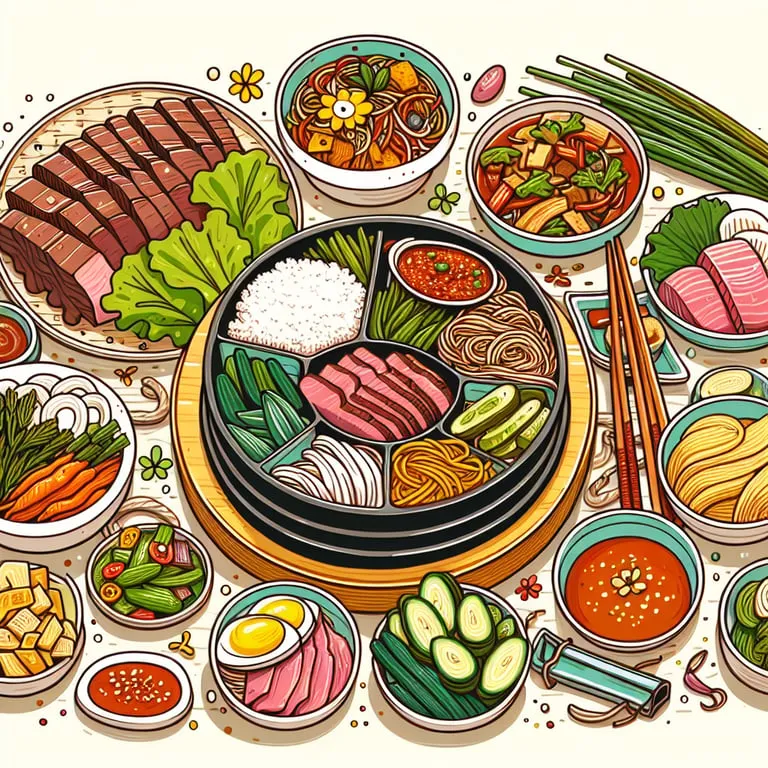
The Heart of the Korean Table: Must-Try Traditional Dishes
For a beginner, the sheer variety of Korean dishes can be overwhelming. Let’s start with the absolute classics—the dishes that form the foundation of Korean cuisine and are loved by millions.
1. Kimchi (김치): The Soul of Korean Food
You cannot talk about Korean food without starting with Kimchi. To call it a simple side dish is a massive understatement. Kimchi is the soul of our cuisine. It’s a traditional fermented vegetable dish, most commonly made with napa cabbage, but there are hundreds of varieties using radishes, cucumbers, and scallions.
The flavor profile is a complex explosion: spicy, sour, savory, and umami-rich, all at once. For me, the difference between store-bought Kimchi in Canada and the deeply fermented, homemade Kimchi from a relative in Korea was a revelation. The homemade version had a fizz, a tang, and a depth of flavor that was alive.
- How it’s eaten: Kimchi is served with literally every Korean meal as a banchan (반찬, side dish). But it’s also a powerful ingredient in countless other dishes like Kimchi Jjigae (stew), Kimchi Bokkeumbap (fried rice), and Kimchi Jeon (pancake).
2. Bibimbap (비빔밥): A Perfect Bowl of Harmony
Bibimbap, which translates to “mixed rice,” is perhaps one of the most visually stunning and internationally recognized Korean dishes. It’s a large bowl of warm rice topped with an array of seasoned vegetables (namul, 나물), thinly sliced meat (usually beef), a fried egg, and a dollop of spicy Gochujang (고추장, chili paste).
The philosophy behind Bibimbap is rooted in obangsaek (오방색), the Korean concept of five colors (white, black, red, green, and yellow), which represent the five elements of the universe and are believed to ensure a balanced and healthy meal. Before eating, you mix everything together with your spoon, creating a perfect harmony of flavors and textures in every bite. It’s a complete, nutritious, and incredibly satisfying meal.
3. Bulgogi (불고기): The Irresistible Sweet & Savory BBQ
If you’re new to Korean food and wary of spice, Bulgogi is your perfect entry point. Meaning “fire meat,” Bulgogi consists of thinly sliced beef (often sirloin or ribeye) marinated in a sweet and savory sauce made from soy sauce, sugar, sesame oil, garlic, and pear juice. The pear not only adds a subtle sweetness but also acts as a natural tenderizer, making the meat incredibly soft.
It’s traditionally grilled, but pan-frying it at home is just as common and delicious. The slightly caramelized, smoky, and tender meat is addictive. It’s a guaranteed crowd-pleaser, beloved by kids and adults alike.
4. Jjigae (찌개): The Comforting, Bubbling Stews
A Korean meal often feels incomplete without a bubbling, communal stew, or Jjigae, placed in the center of the table. These are heartier and more robust than a soup (guk, 국). Two are absolutely essential to know:
- Kimchi Jjigae (김치찌개): This is the ultimate Korean comfort food. Made with old, sour Kimchi, chunks of pork or tuna, tofu, and scallions, it’s a fiery, tangy, and deeply savory stew that warms you from the inside out. Sharing a bubbling pot of Kimchi Jjigae with friends on a cold winter evening in Seoul is a core memory for me.
- Doenjang Jjigae (된장찌개): Made with fermented soybean paste (doenjang), this stew is the Korean equivalent of Japanese miso soup, but with a much funkier, earthier, and more robust flavor. It’s packed with tofu, potatoes, zucchini, and sometimes clams or beef. It delivers a powerful umami punch and is a staple in Korean households.
More Than Just a Meal: Understanding Korean Dining Culture
To truly appreciate Korean food, you need to understand the culture surrounding it. In the West, meals are often served on individual plates. In Korea, dining is a profoundly communal experience.
The Culture of Banchan (반찬)
When you sit down at a traditional Korean restaurant, your table will quickly be filled with a variety of small dishes before your main course even arrives. These are banchan, or side dishes, and they are a fundamental part of the meal. They can range from various types of Kimchi to seasoned vegetables, pickled radishes, and soy-braised potatoes.
The best part? They are shared by everyone at the table and are almost always refillable for free. This generosity is a hallmark of Korean hospitality. It reflects a philosophy that a meal should be abundant and diverse.
The Spirit of Sharing and Jeong (정)
Many of the main dishes, like Korean BBQ (gogi-gui, 고기구이) and Jjigae, are cooked and served communally. You cook the meat together on a grill set in the middle of the table, and you eat the stew from the same pot. This act of sharing food from a common vessel fosters a sense of togetherness and emotional connection, a concept known as jeong (정). Jeong is a deep and uniquely Korean feeling of affection, loyalty, and community.
Table Manners and Respect
Korean culture places a strong emphasis on respect, especially for elders. This is clearly reflected in table manners:
- Elders Eat First: You should wait for the oldest person at the table to pick up their spoon or chopsticks before you begin eating.
- Pouring Drinks: When pouring a drink for an elder or someone of higher status, you should hold the bottle with your right hand and support your right forearm with your left hand. You should never fill your own glass; it’s a sign of community to fill each other’s.
- Spoon and Chopsticks: Unlike in some other Asian cultures, Koreans use both a spoon and chopsticks. The spoon is for rice and soupy dishes, while the chopsticks are for side dishes. It’s considered rude to hold both in one hand at the same time or to stick your chopsticks upright in your rice bowl (as this resembles incense for ancestral rites).
Your First K-Food Adventure: Easy Recipes for Beginners
Ready to bring the flavors of Korea into your own kitchen? These two recipes are simple, forgiving, and use ingredients that are becoming easier to find.
Recipe 1: Kimchi Bokkeumbap (김치볶음밥 – Kimchi Fried Rice)
This is the ultimate Korean comfort food and the perfect way to use leftover rice and older, more sour Kimchi.
-
Ingredients:
- 1 cup chopped aged Kimchi
- 2 cups cooked, day-old rice
- 1/4 cup Kimchi juice
- 100g pork belly or spam, diced (optional)
- 1/2 small onion, chopped
- 1 tbsp Gochujang (optional, for extra spice)
- 1 tsp sesame oil
- 1 tbsp vegetable oil
- 1-2 eggs
- Toasted seaweed (gim, 김) and sesame seeds for garnish
-
Instructions:
- Heat the vegetable oil in a pan over medium-high heat. If using pork or spam, add it and cook until browned.
- Add the chopped onion and cook for 2 minutes until it softens.
- Add the chopped Kimchi and cook for another 5 minutes, stirring frequently, until the Kimchi is soft and slightly caramelized.
- Add the day-old rice, Kimchi juice, and Gochujang (if using). Use a spatula to break up the rice and mix everything together thoroughly. Cook for 3-4 minutes.
- Turn off the heat and stir in the sesame oil.
- In a separate pan, fry an egg sunny-side up.
- Serve the fried rice in a bowl, topped with the fried egg, crumbled toasted seaweed, and a sprinkle of sesame seeds.
Recipe 2: Easy Pan-Fried Bulgogi (불고기)
You don’t need a grill for this. A simple frying pan works perfectly.
-
Ingredients:
- 500g thinly sliced beef (ribeye or sirloin)
- 1/2 small onion, thinly sliced
- 1/4 cup soy sauce
- 2 tbsp brown sugar or honey
- 1 tbsp sesame oil
- 2 cloves garlic, minced
- 1 tbsp grated Korean pear or apple (optional, but recommended for tenderness)
- 1 scallion, chopped
- A pinch of black pepper
-
Instructions:
- In a large bowl, combine the soy sauce, sugar, sesame oil, minced garlic, grated pear/apple, and black pepper. This is your marinade.
- Add the thinly sliced beef and sliced onions to the marinade. Use your hands to gently mix everything together, ensuring the meat is fully coated. Let it marinate for at least 30 minutes (or up to a few hours in the fridge for deeper flavor).
- Heat a large skillet or frying pan over medium-high heat. You don’t need to add extra oil as the marinade contains it.
- Add the marinated beef and onions to the hot pan in a single layer (cook in batches if needed to avoid overcrowding).
- Cook for 3-5 minutes, stirring occasionally, until the beef is fully cooked and slightly caramelized at the edges.
- Garnish with chopped scallions and serve immediately with a bowl of steamed rice.
Korean food is an adventure for the senses. It’s a journey of bold flavors, rich history, and warm community. Don’t be afraid to explore, to try new things, and to even make a few mistakes in the kitchen. The most important ingredient, after all, is a curious and open heart. Enjoy your meal! Masitge deuseyo! (맛있게 드세요!)
Frequently Asked Questions (FAQ)
Q: Is all Korean food spicy?
A: Not at all! This is a common misconception. While spicy dishes like Kimchi Jjigae are very popular, there are many beloved non-spicy dishes. Bulgogi (marinated beef), Japchae (glass noodle stir-fry), Gimbap (seaweed rice rolls), and Seolleongtang (ox bone soup) are all delicious and completely mild.
Q: What exactly is Gochujang?
A: Gochujang (고추장) is a staple Korean condiment. It’s a thick, fermented chili paste made from red chili powder, glutinous rice, fermented soybeans, and salt. It has a complex flavor profile that is spicy, savory, and slightly sweet. It’s a key ingredient in dishes like Bibimbap, Tteokbokki (spicy rice cakes), and many stews.
Q: Are there vegetarian options in Korean cuisine?
A: Yes, absolutely. Traditional Korean temple cuisine is entirely vegetarian. Many everyday dishes can also be made vegetarian. Bibimbap can be made without meat, and there are many vegetable-based banchan (side dishes) and jeon (pancakes) like Pajeon (scallion pancake). Just be mindful that fish sauce or shrimp paste is sometimes used for flavoring, so it’s always good to ask if you’re at a restaurant.
Q: What is the difference between Kimchi Jjigae and Budae Jjigae?
A: Kimchi Jjigae is a traditional stew centered around the flavor of aged kimchi, often with pork and tofu. Budae Jjigae (부대찌개), or “Army Base Stew,” is a more modern fusion dish born after the Korean War. It has a Kimchi Jjigae base but includes American processed foods like spam, hot dogs, and baked beans, along with instant ramen noodles. It’s a rich, hearty, and very popular dish.
Q: What should I drink with Korean food?
A: Soju, a clear distilled spirit, is the most iconic pairing, especially with Korean BBQ. For a lighter option, beer (maekju, 맥주) is very common. A popular combination is somaek (소맥), a shot of soju dropped into a glass of beer. For non-alcoholic options, roasted barley tea (boricha, 보리차) is often served for free in restaurants and is very refreshing.
Q: Can I make Kimchi at home?
A: Yes, you can! While it seems intimidating, making Kimchi at home is a very rewarding process. There are many recipes and video tutorials available online for beginners. A simple version called geotjeori (겉절이) is a fresh, unfermented kimchi that’s very easy to make for a quick kimchi fix.
Q: What is the proper way to use a spoon and chopsticks in Korea?
A: The spoon is used for eating rice and any soups or stews. The chopsticks are used for eating all the side dishes (banchan). You generally don’t use both at the same time. You would pick up some rice with your spoon, put the spoon down, and then use your chopsticks to pick up a piece of a side dish.
Q: I’m going to a Korean restaurant for the first time. What should I order?
A: For a fantastic first experience, you can’t go wrong with Korean BBQ (like Bulgogi or Galbi) as it’s interactive and delicious. Ordering a Bibimbap is also a great choice as it gives you a balanced taste of various vegetables and flavors. If you’re feeling adventurous, try a comforting bowl of Sundubu Jjigae (soft tofu stew).

Written by WhatIneed.kr
Having lived in South Korea, the US, and Canada, I love experiencing and exploring diverse cultures and dietary habits. As a dedicated food guide, I explore the rich traditions of Korean cuisine, specializing in authentic home cooking, traditional fermentation, and peaceful Korean temple food.