The aroma of a simmering pot of fermented soybean paste stew—known as doenjang-jjigae—is more than just a culinary signal that dinner is ready. For many, it is a sensory bridge to the past, a grounding scent that evokes memories of home, warmth, and ancestral wisdom. While many global food enthusiasts are familiar with the savory, umami-rich profile of this Korean staple, few realize that its roots stretch back over a millennium, deeply intertwined with the rise and fall of the Baekje Kingdom. To truly appreciate doenjang, one must look beyond the clay pot and into the rich volcanic soil and strategic waterways of ancient Korea.
The story of doenjang is a saga of survival, innovation, and cultural exchange. It is the story of how a humble bean was transformed into a nutritional powerhouse that sustained armies and commoners alike. As we explore the history of the “Baekje Soybean” and the sophisticated fermentation techniques of the era, we uncover the DNA of a flavor that has remained remarkably consistent through the ages.
 .
.
The Northern Legacy: Wisdom Born of Cold and Necessity
The origins of Baekje’s fermentation prowess do not begin in the south, but rather in the harsh, windswept plains of the north. The founders of Baekje were descendants of the Buyeo people, a northern tribe originating from the Manchurian region. In these northern latitudes, the winters were unforgiving and the growing seasons short. Survival dictated a need for advanced food preservation.
The Buyeo people were masters of “salting and fermenting.” They understood that by combining salt with vegetables, meats, and notably, the indigenous soybeans of the region, they could create a shelf-stable source of protein and probiotics that would last through the coldest months. When these people migrated south to the Han River basin to establish the Baekje Kingdom, they brought this “northern wisdom” with them.
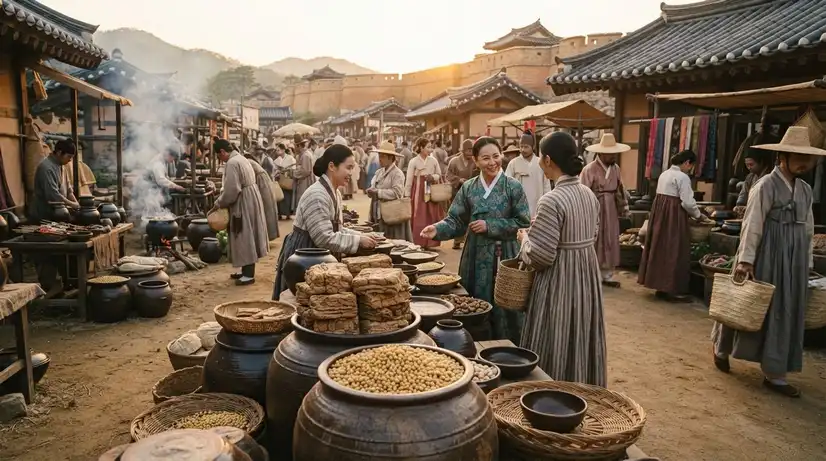
This wasn’t just a simple cooking method; it was a sophisticated biotechnology of the era. By the time the Baekje Kingdom was flourishing, these techniques had evolved into a standardized system of fermentation. Archaeological evidence from Pungnaptoseong—a major earthen fortification of the early Baekje period—has revealed massive earthenware jars used specifically for large-scale storage. These weren’t just for individual families; they suggest a state-managed system of food security where fermented pastes were produced in bulk to sustain the military and the urban population.
The Baekje Soybean: A Geographical Masterpiece
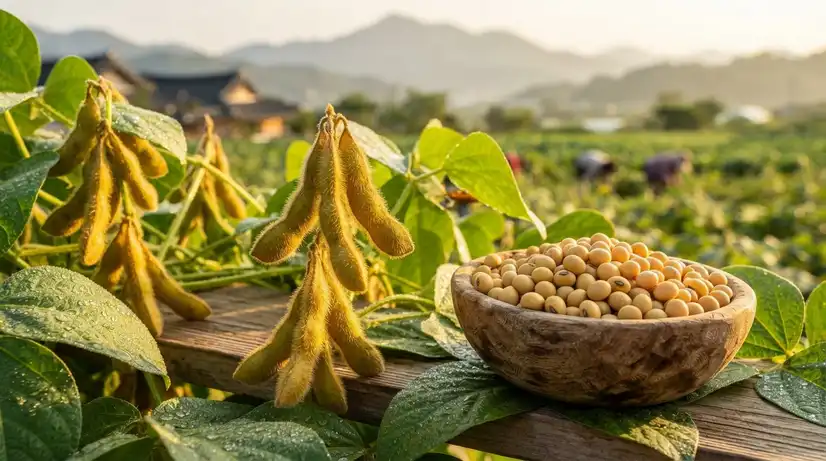
If fermentation was the technology, the “Baekje Soybean” was the premium raw material. The regions occupied by Baekje—primarily the modern-day Chungcheong and Jeolla provinces—are legendary for their fertile alluvial soil. Even today, these areas are considered the “breadbasket” of the Korean peninsula.
The soybeans grown in this specific terroir were known for being exceptionally large, dense, and rich in oils. This was crucial because the quality of doenjang depends entirely on the amino acid profile of the bean. A thicker, more nutrient-dense bean meant a deeper, more complex fermentation process. These beans were so central to the kingdom’s identity that they formed the backbone of the economy.
However, a great bean is nothing without salt. Baekje’s strategic brilliance lay in its control of the “Salt Route.” By dominating the salt ponds of Incheon and the Gyeonggi Bay, the kingdom secured a steady supply of high-quality sea salt. This salt was transported via the Han River directly into the heart of the capital. This synergy between the high-quality soybeans from the fertile plains and the pristine sea salt from the coast allowed Baekje to refine the production of si (fermented beans) into an art form.
Beyond Borders: How Baekje Shaped the Flavors of Asia
One of the most fascinating chapters in the history of doenjang is its role as a cultural export. Baekje was not an isolated kingdom; it was a maritime power and a hub of intellectual and technological exchange. During the 7th century, as Baekje interacted heavily with the Japanese archipelago, they didn’t just bring Buddhism and architecture—they brought their fermented soul food.
Historical records and linguistic studies suggest that the Japanese word Miso may actually have its roots in the ancient Baekje language. It is documented that Baekje artisans and scholars moved to Japan, bringing with them the technology to ferment soybeans. They introduced “Baekje-si” (Baekje fermented beans), which served as the foundation for what would eventually evolve into the various regional styles of Japanese miso.
This reveals Baekje as a “fermentation hub” for East Asia. The sophisticated balance of salty, savory, and earthy flavors developed in the Baekje royal kitchens eventually flowed outward, influencing the culinary landscapes of neighboring nations. When you taste a deep, aged miso today, you are experiencing a distant relative of the original Baekje soybean paste.

Simmering History: The Ancestral Stew
While we often think of history through grand battles and royal decrees, it is also found in the humblest of objects: the soup pot. Excavations of Baekje sites have unearthed specific types of earthenware known as Hwagyeong—small, sturdy pots that resemble modern-day ttukbaegi (clay pots). These vessels were designed for simmering, indicating that the practice of boiling fermented paste with water, vegetables, and local ingredients was well-established.
The diet of a Baekje citizen was remarkably healthy by modern standards. They utilized a wide variety of ” 잡과” (miscellaneous fruits and vegetables) such as turnips, radishes, green onions, and garlic. These were often dipped directly into raw doenjang or simmered together to create a restorative broth. This is the proto-version of doenjang-jjigae.
Furthermore, the culture of chimchae (the precursor to kimchi) developed alongside doenjang. Vegetables were preserved in the salty brine of the soybean paste, creating a symbiotic relationship between fermented greens and fermented beans. This combination provided a complete nutritional profile—protein, vitamins, and minerals—allowing the people of Baekje to maintain high levels of health and vitality.
The Modern Legacy: Keeping the Tradition Alive in Buyeo
The spirit of the Baekje Kingdom hasn’t vanished; it lives on in the traditional artisans of Chungnam Buyeo and Gongju. In the very soil where the Baekje soybean once thrived, modern farmers and master fermenters continue to honor ancient methods.
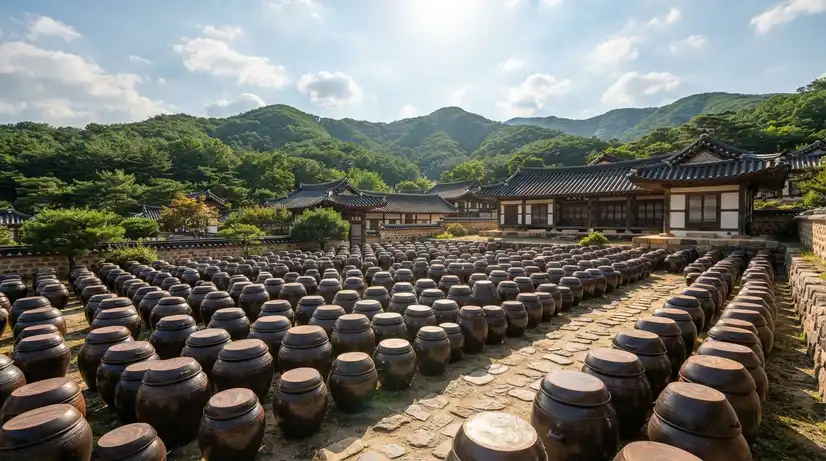
In areas like Jangam-myeon and Eunsan-myeon in Buyeo County, the tradition of slow fermentation is still a way of life. Producers like Danmi and Hangil Foods are not just making a product; they are preserving a historical legacy. They use locally grown soybeans, mountain spring water, and the natural breezes of the Geumgang River basin to age their pastes in sun-drenched earthenware courtyards.
Tasting doenjang from these regions is a different experience than consuming mass-produced versions. There is a “funk,” a depth, and a lingering sweetness that can only come from time and the specific microbial environment of the Baekje heartland. It is a reminder that in our fast-paced world, some things are still worth waiting for.
Conclusion: A Bowl of Continuity
Doenjang is more than a condiment; it is a testament to the ingenuity of the Baekje people. From the northern wisdom of the Buyeo tribes to the fertile fields of the south, and eventually to the dinner tables of modern-day Seoul and beyond, this fermented paste has survived for centuries. It represents a bridge between survival and art, between history and the present moment.
Next time you enjoy a steaming bowl of doenjang-jjigae, take a moment to appreciate the “Baekje Soybean” and the thousands of years of trial, error, and refinement that went into that single spoonful. You aren’t just eating a meal; you are participating in a culinary tradition that helped build a kingdom.
FAQ
Q: What exactly is the ‘Baekje Soybean’?
A: The ‘Baekje Soybean’ refers to the high-quality soybeans traditionally grown in the fertile regions of the Baekje Kingdom (modern-day Chungcheong and Jeolla provinces). These beans were known for their large size and high nutrient density, making them ideal for long-term fermentation.
Q: Did the Baekje people invent doenjang?
A: While fermentation of beans was practiced by various northern tribes (like the Buyeo), the Baekje Kingdom is credited with refining these techniques into a sophisticated, state-managed system and spreading the culture across the peninsula and to Japan.
Q: Is there any archaeological evidence of Baekje doenjang?
A: Yes. Large earthenware storage jars found at Pungnaptoseong and various simmering pots (Hwagyeong) found in Baekje ruins indicate that fermented pastes were produced and consumed on a large scale.
Q: How did Baekje influence Japanese Miso?
A: Historical records suggest that Baekje artisans brought fermented soybean technology (known as Baekje-si) to Japan. Some linguists believe the word ‘Miso’ itself evolved from ancient Baekje terminology for fermented beans.
Q: Why was salt so important for Baekje’s doenjang production?
A: Salt is a primary agent in fermentation that prevents spoilage. Baekje controlled the salt-producing regions along the west coast, ensuring they had the necessary raw materials to produce massive quantities of fermented goods.
Q: What is the difference between Baekje-style doenjang and modern commercial doenjang?
A: Traditional Baekje-style doenjang, still made in places like Buyeo, uses only soybeans, salt, and water with long natural aging. Modern commercial versions often use wheat flour and accelerated fermentation methods, resulting in a less complex flavor.
Q: Can I visit the ‘heartland’ of Baekje doenjang today?
A: Yes, Buyeo and Gongju in Chungcheongnam-do are the historical capitals of Baekje. You can find many traditional producers in these areas who still use local beans and ancient fermentation methods.
Q: What are the health benefits of traditional doenjang?
A: Traditional doenjang is rich in probiotics, high-quality vegetable protein, and bioactive compounds like isoflavones, which are known for their antioxidant and anti-cancer properties.
Q: Was doenjang eaten by commoners or only royalty in Baekje?
A: While the royalty had access to the most refined versions, doenjang was a staple for everyone. Its long shelf life made it an essential survival food for commoners and a primary ration for the military.
Q: How should I look for authentic Baekje-style doenjang in the market?
A: Look for products labeled “Traditional” (전통) or those sourced from the Buyeo/Gongju regions. Check the ingredient list for simplicity—ideally just Korean soybeans (Meju), salt, and water.

Written by WhatIneed.kr
Having lived in South Korea, the US, and Canada, I love experiencing and exploring diverse cultures and dietary habits. As a dedicated food guide, I explore the rich traditions of Korean cuisine, specializing in authentic home cooking, traditional fermentation, and peaceful Korean temple food.