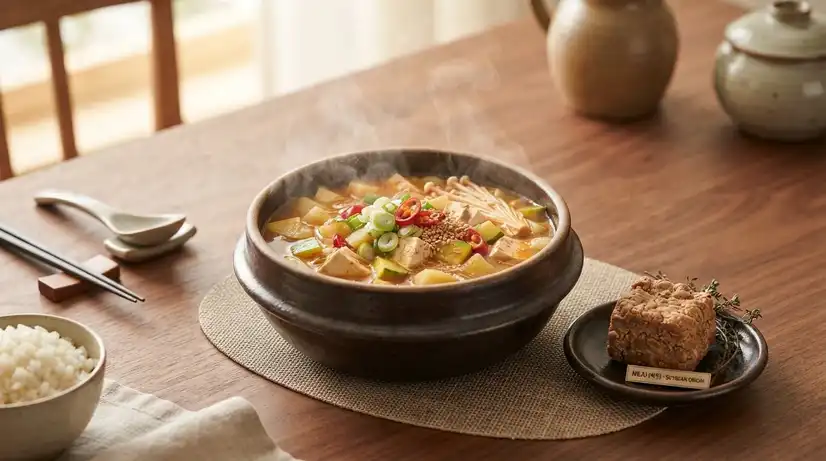
Imagine walking through a quiet, frost-dusted Korean village in the late autumn. As the sun dips behind the granite peaks, a distinct, earthy, and pungent aroma begins to drift through the air. For those unfamiliar, it might be a curious scent, but for anyone who understands the soul of Korean cuisine, it is the smell of life, heritage, and the beginning of a culinary masterpiece. This is the scent of Meju—the fermented soybean brick that serves as the “Mother” of the entire Korean flavor profile.
Meju is not merely an ingredient; it is a biological foundation. In the West, we often marvel at the complexity of aged cheeses or the depth of a well-matured balsamic vinegar. Meju sits in that same pantheon of fermented excellence. It is the raw progenitor from which Ganjang (soy sauce), Doenjang (soybean paste), and Gochujang (chili paste) are born. Without Meju, the Korean table would lose its backbone, its “umami,” and its history. In this comprehensive guide, we will explore the deep science, the meticulous craftsmanship, and the spiritual heritage behind these humble bricks of fermented gold.
The Cultural Significance: Why Meju is the “Mother”
To understand Meju is to understand the Korean philosophy of “Jang” (fermented sauces). In traditional Korean households, the quality of a family’s Jang was considered a direct reflection of the household’s health and virtue. For centuries, the “Mother of All Jang” has been the starting point of the culinary year.
The term “Mother” is used quite literally. Just as a mother provides the genetic blueprint and nourishment for her children, Meju provides the microbial life and amino acid profile that defines the sauces produced from it. When you taste a deeply savory doenjang soup or a salty, clear ganjang, you are tasting the evolution of the Meju brick. It represents the “Slow Food” movement long before the term was popularized in the West. It is a process that defies the modern urge for instant gratification, requiring months of patience and a rhythmic harmony with the seasons.
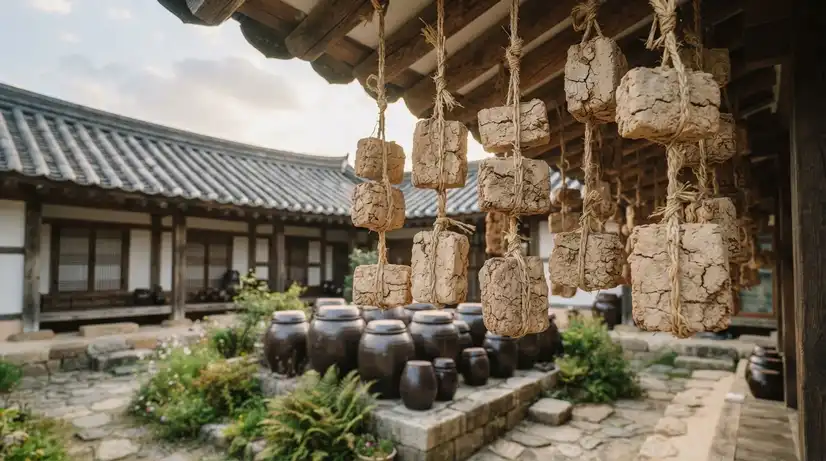
The Alchemical Journey: From Harvested Bean to Fermented Brick
The creation of Meju is an exercise in timing and environmental mastery. It begins in the late autumn, specifically around the time of the first frost, when the year’s harvest of “Baektae” (yellow soybeans) is complete. These beans are prized for their high protein content and creamy texture.
1. Selection and Preparation
The process begins with a meticulous cleaning of the beans. Only the plumpest, most perfect specimens are chosen. These are soaked in water until they swell, absorbing the moisture needed for the proteins to break down. The next stage is boiling—a task that takes several hours. The beans must be cooked until they reach a deep golden hue and are soft enough to be crushed between two fingers with minimal effort. Overcooking can lead to a bitter taste, while undercooking prevents the beneficial microbes from penetrating the core of the brick.
2. Mashing and Shaping
Once the beans are steaming and soft, they are drained and mashed while still hot. Traditionally, this was done using a large stone mortar or by treading on them in bags. The goal is to create a thick, malleable paste that still retains some texture. This paste is then hand-molded into bricks. In some regions, they are rectangular like blocks of gold; in others, they are shaped into round spheres. The density is crucial—too loose, and the brick falls apart; too tight, and the oxygen cannot reach the center for fermentation.
3. The Initial Surface Drying
Before the deep fermentation begins, the bricks must undergo a surface-drying phase. They are laid out on mats for several days until the exterior becomes hard and crusty. This outer shell acts as a protective barrier, allowing the interior to stay moist enough for the “good” bacteria to thrive while preventing “bad” molds from taking root too quickly.
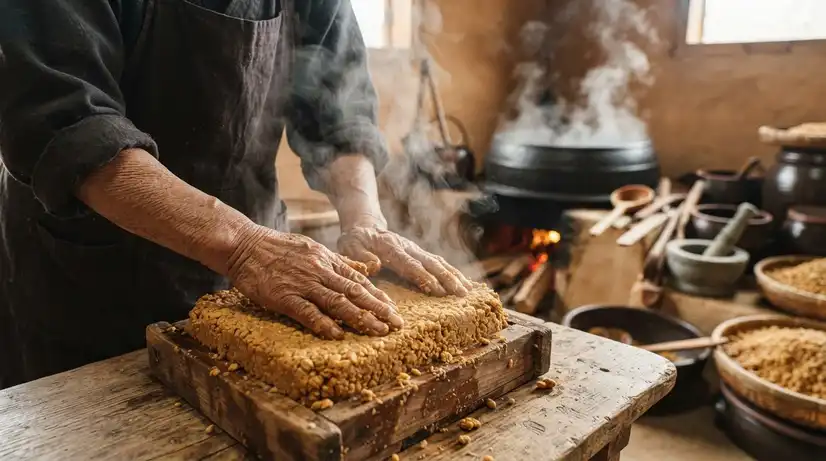
The Microbial Symphony: The Science of Fermentation
What happens inside a Meju brick is nothing short of a biological miracle. Unlike Japanese Koji, which is often inoculated with a specific, laboratory-grown mold (Aspergillus oryzae), traditional Korean Meju relies on “spontaneous fermentation.” This means the microbes come from the air, the environment, and specifically, the rice straw used to tie the bricks.
The Role of Bacillus subtilis
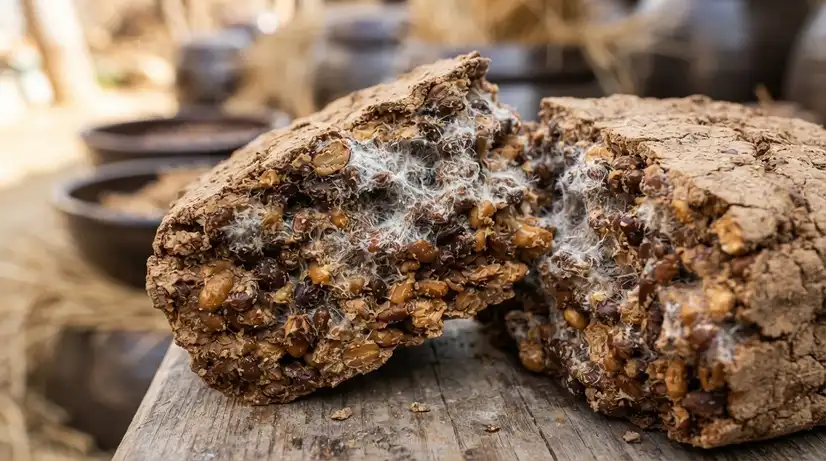
The superstar of Meju fermentation is Bacillus subtilis, commonly known as the hay bacillus. This bacterium thrives in the warm, humid environment of the drying room. As the Meju bricks hang, the Bacillus subtilis from the rice straw migrates into the beans. It secretes powerful enzymes—proteases and amylases—that begin the monumental task of breaking down complex soybean proteins into peptides and amino acids.
The Development of Umami
The primary amino acid produced during this breakdown is glutamic acid. This is the source of the “umami” flavor that makes Korean stews so deeply satisfying. Along with Bacillus subtilis, various wild yeasts and fungi (like Aspergillus and Mucor) join the party. Each of these microorganisms contributes different flavor compounds, creating a complex “terroir” similar to that found in fine wines. This is why Meju made in a seaside village will taste subtly different from Meju made in a high mountain valley; the microbial makeup of the air is different.
The Fermentation Environment
Temperature control is vital. Traditionally, Meju was kept in the “Ondol” (heated floor) rooms of traditional houses. The gentle, consistent warmth encouraged the growth of white beneficial molds. If the room was too hot, the Meju would “rot” rather than ferment; too cold, and the process would stall. This delicate balance is what defines the skill of a true master.
The Great Separation: From One Brick to Two Souls
After the Meju has fermented and dried for several months (usually through the winter), it undergoes a transformation known as “Jang-gareugi”—the separation of the Jang. This is perhaps the most unique aspect of Korean fermentation science.
| Component | Resulting Product | Characteristic | Primary Use |
|---|---|---|---|
| Liquid Extract | Ganjang (Soy Sauce) | Salty, dark, packed with liquid umami | Seasoning soups, stir-fries, and dipping sauces. |
| Solid Residue | Doenjang (Soybean Paste) | Thick, textured, pungent, and savory | Base for hearty stews (Jjigae) and ssamjang. |
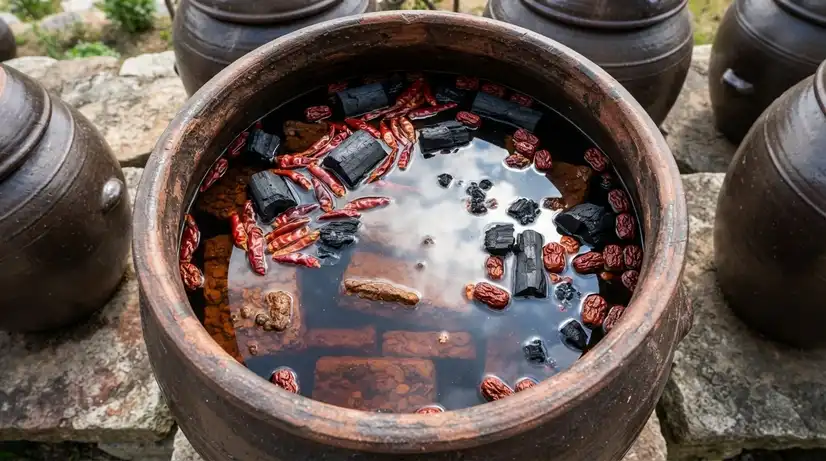
In the early spring, the Meju bricks are washed and placed into large earthenware jars (Onggi) filled with a high-concentration brine. For 40 to 60 days, the salt water extracts the essence of the Meju.
When the time is right, the liquid is drained off and boiled to become Ganjang. This liquid soy sauce is then aged, sometimes for years or even decades. The remaining softened solids are mashed together, often with a bit more salt or steamed grain, and packed back into the jars to become Doenjang. It is a zero-waste system where every molecule of the soybean is honored and utilized.
Rituals and Wisdom: The Spirit of the Jar
Beyond the science and the labor, Meju is surrounded by a wealth of folk wisdom and spiritual tradition. In ancient Korea, making Jang was a sacred act. The “Jangdokdae”—the terrace where the earthenware jars are kept—was considered a holy space within the home.
The Protective “Geumjul”
When the Jang was set to ferment, a “Geumjul” (a sacred rope made of twisted rice straw) was often hung around the jars. Woven into the rope were pieces of charcoal and red peppers. While this had a spiritual meaning—warding off “evil spirits” or bad luck that might spoil the batch—it also had a practical side. The charcoal acted as a natural purifier, and the red peppers symbolized heat and vitality.
The Breath of the Onggi
The choice of vessel is as important as the Meju itself. “Onggi” are breathable earthenware jars. Because the clay is porous, it allows for microscopic air exchange, which is essential for the aerobic bacteria in the Meju to continue their work during the long aging process. This “breathing” prevents the paste from becoming stagnant and allows the flavors to concentrate and mellow over time.
The Philosophy of Waiting
In an era of fast food and instant results, Meju teaches us the value of time. You cannot rush a Meju brick. It requires the cold of winter to dry, the warmth of spring to ferment, and the sun of summer to age. It is a food that connects the consumer to the cycle of the seasons. To eat Doenjang made from traditional Meju is to consume a year’s worth of sunlight, wind, and carefully managed microbial life.
Modern Evolution: Traditional vs. Modified Meju
In today’s busy world, not everyone has the months required to make traditional “Jarae-shik” Meju. This has led to the rise of “Gaeryang-shik” or modified Meju.
- Traditional Meju: Uses 100% soybeans and natural airborne microbes. The flavor is deep, complex, and sometimes funkier. It is the gold standard for authentic Korean flavor.
- Modified Meju (Al-meju): Often inoculated with a specific strain of mold (usually Aspergillus oryzae) and fermented in a controlled factory environment. It is much faster to produce and has a cleaner, simpler, and sweeter taste. While convenient, it lacks the multi-layered complexity that “natural” Meju provides.
However, there is a massive resurgence in the appreciation for traditional Meju. Modern chefs in Seoul, New York, and London are rediscovering the “Mother of All Jang” as a way to add unparalleled depth to contemporary dishes. Whether it’s a Doenjang-glazed black cod or a Ganjang-infused caramel, the foundation laid by the humble soybean brick continues to inspire.
Conclusion: Honoring the Foundation
Meju is the quiet hero of the Korean kitchen. It isn’t flashy like the bright red of Gochugaru (chili flakes) or the pungent kick of garlic, but it is more fundamental than either. It is the substrate upon which the entire culinary identity of a nation is built.
By understanding Meju, we gain a deeper respect for the natural world and the invisible microbes that sustain us. We learn that great flavor cannot be manufactured; it must be grown. As you enjoy your next bowl of Doenjang-jjigae, take a moment to think of the humble soybean brick, hanging under the eaves of a Hanok, catching the winter wind and slowly, patiently turning into the “Mother of All Jang.”
FAQ
Q: Does Meju have a very strong smell during fermentation?
A: Yes, traditional Meju has a very pungent, earthy, and sometimes “cheesy” aroma during the fermentation process. This is a natural result of the proteins breaking down into amino acids. Once it is processed into soy sauce or soybean paste and aged, the smell mellows out into a rich, savory fragrance.
Q: Is Meju gluten-free?
A: Traditional “Jarae-shik” Meju is made from 100% soybeans and salt water, making it naturally gluten-free. However, some modern or “modified” versions may use wheat or barley as a fermenting agent, so it is important to check the ingredients if you have a gluten sensitivity.
Q: Can I make Meju at home in a modern apartment?
A: It is challenging due to the need for specific temperature, humidity, and air circulation. Traditional Meju relies on wild microbes found in nature and rice straw. However, many people now use “Meju fermentation machines” or controlled heating pads to replicate the environment of a traditional “Ondol” room.
Q: What is the white mold often seen on the surface of Meju?
A: The white “bloom” is usually Bacillus subtilis or beneficial Aspergillus molds. These are the “good” microbes that create the enzymes necessary for fermentation. If the mold is black or green and fuzzy, it usually indicates a spoilage issue due to improper moisture control.
Q: How long can Meju be stored?
A: Once Meju is fully dried, it is quite shelf-stable in a cool, dry place. However, it is usually used within the first year to make the new batch of Jang. Once it is turned into Ganjang or Doenjang, those products can be aged for many years—even decades.
Q: Why is rice straw so important in the Meju making process?
A: Rice straw is the natural habitat for Bacillus subtilis. By tying the bricks with straw, you are effectively “seeding” the beans with the necessary bacteria to start the fermentation process naturally.
Q: Is there a nutritional benefit to eating food made from Meju?
A: Absolutely. The fermentation process increases the bioavailability of the nutrients in the soybeans. It is rich in probiotics (in the raw state), bioactive peptides, and antioxidants. It is also an excellent source of plant-based protein.
Q: What is the difference between Meju and Japanese Miso?
A: While both involve fermented soybeans, Meju is a dried brick that undergoes spontaneous fermentation and is later used to make both soy sauce and paste. Miso is generally made by mixing steamed soybeans with “Koji” (grain inoculated with a specific mold) and fermenting it as a paste from the start.
Q: Why are charcoal and red peppers added to the jars during the aging process?
A: Historically, they were believed to ward off evil spirits. Scientifically, charcoal helps absorb impurities and odors in the brine, while red peppers have antimicrobial properties that help suppress the growth of unwanted bacteria.
Q: Can I eat Meju directly?
A: While Meju is non-toxic, it is extremely hard, salty, and pungent in its brick form. It is intended to be a base for sauces and stews rather than eaten as a snack. However, the softened “Cheonggukjang” (a quick-fermented version) is often consumed directly in stews.

Written by WhatIneed.kr
Having lived in South Korea, the US, and Canada, I love experiencing and exploring diverse cultures and dietary habits. As a dedicated food guide, I explore the rich traditions of Korean cuisine, specializing in authentic home cooking, traditional fermentation, and peaceful Korean temple food.