
Beginner Temple Recipes: Discovering Serenity in Your Kitchen, One Delicious Bite at a Time!
Hey there, food lovers! Feeling a little overwhelmed by your daily routine and craving a moment of peace, perhaps even a healthy meal to cleanse your body and soul? Well, guess what?! Today, I’m absolutely thrilled to share my top 10 beginner-friendly temple food recipes with you. When you hear “temple food,” you might imagine something super complicated, needing exotic ingredients, right? But trust me, it’s actually filled with surprisingly simple dishes, often made with ingredients you can easily find at your local grocery store! Especially for those of us tired of overly spicy or heavily seasoned meals, temple food offers a genuine respite, allowing the natural flavors of ingredients to truly shine.
One of the coolest things about temple food is its unique principle of avoiding oshinchae (five pungent vegetables: green onions, garlic, chives, wild garlic, and heunggeo or asafetida). This practice really lets the inherent aroma and taste of each ingredient come through in a profound way. It’s all about honoring nature’s rhythm by using seasonal ingredients and cooking with a mindful heart that respects all living things. Having lived in both Korea and North America for over a decade, I’ve found that this philosophy resonates deeply with the growing interest in mindful eating and sustainable living that we see blossoming around the world. These recipes? I’ve made them myself and was just blown away by how delicious and easy they were, even for a beginner like me! Why not try one for dinner tonight? I bet you’ll fall head over heels for the gentle, refreshing charm of temple food.
Understanding Temple Food: More Than Just a Meal
Before we dive into the deliciousness, let’s chat a bit more about what makes temple food so special. It’s not just about what you eat, but how you eat and prepare it. This ancient culinary tradition, deeply rooted in Korean Buddhism, emphasizes balance, mindfulness, and a connection to nature. Unlike many modern diets focused purely on macros, temple food prioritizes seasonal ingredients, which are at their peak nutritional value and flavor. For example, in Spring 2025, you might find fresh greens like bomdong and chwinamul prominently featured, bursting with vitality!
The exclusion of oshinchae is a cornerstone. In Buddhist philosophy, these pungent vegetables are believed to stimulate the senses and disturb one’s meditative state, making it harder to maintain peace of mind during spiritual practice. For everyday cooks, this means we get to experiment with a whole new world of subtle flavors, relying on natural umami from mushrooms, sea vegetables, and carefully crafted broths. It’s a fantastic exercise in culinary creativity, pushing you to explore beyond your usual flavor profile! Think of it as a form of culinary meditation; a chance to slow down and truly appreciate the journey from farm to table.
Your Beginner’s Guide to Delicious Temple Recipes
Here’s a hand-picked selection of 10 simple temple food recipes that even kitchen novices can absolutely master. Get ready to nourish your body and soothe your spirit!
Our Top 10 Easy-Peasy Temple Delights!
1. Braised Burdock Root (Ueong-Jorim)
This dish takes me straight back to my grandma’s kitchen! It’s seriously simple to make and quickly became a staple side dish in my own home. The crunchy texture of burdock root paired with a sweet and savory sauce? It’s a total rice thief!
* Ingredients: Burdock root 100g, water 3 tbsp, regular soy sauce 2 tbsp, corn syrup (or rice syrup) 2 tbsp, sesame seeds, a dash of sesame oil.
* How-to: Slice burdock root thinly, then soak in water before blanching in salted water. (I actually prefer to use it with the skin on after scrubbing it clean; it really enhances that unique burdock aroma!) Combine water, soy sauce, and corn syrup in a pan and simmer. Once it starts to thicken, drizzle in some sesame oil and sprinkle sesame seeds. (Just be careful not to over-simmer, or it might get too hard!)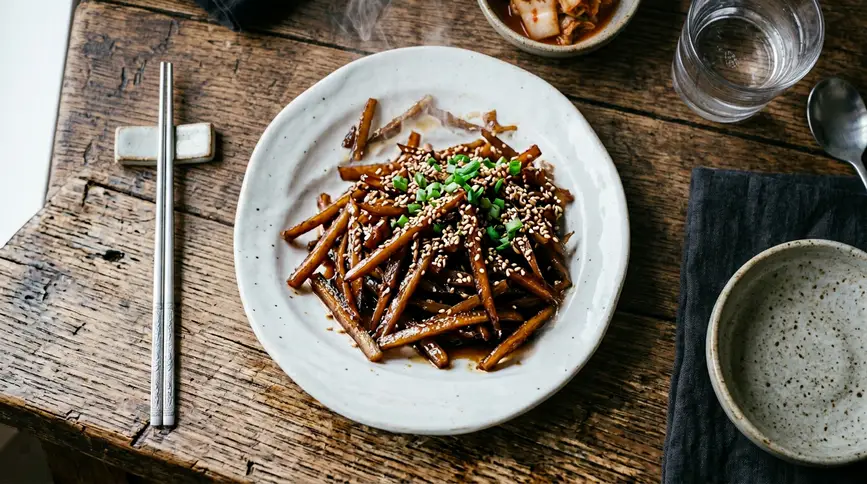
💡 Want to learn more about Burdock Root?
We’ve put together a complete guide on its amazing health benefits and creative cooking tips.
Go check this out ↗
2. Steamed Lotus Root (Yeongeun-Jjim)
Oh, that delightful crunch! Lotus root might seem a bit intimidating, but with this recipe, no worries at all. It’s deliciously plain and healthy.
* Ingredients: Lotus root 100g, water 3 tbsp, regular soy sauce 2 tbsp, sesame seeds, sesame oil, a pinch of salt, a sprinkle of black sesame seeds.
* How-to: Lightly blanch lotus root in water with a drop of vinegar. (This trick prevents browning and removes any bitterness!) Steam the lotus root with water and soy sauce, then mix in sesame oil and sesame seeds. Finish with a sprinkle of black sesame seeds. (Presentation matters, right? The black sesame makes it look so much more appetizing!)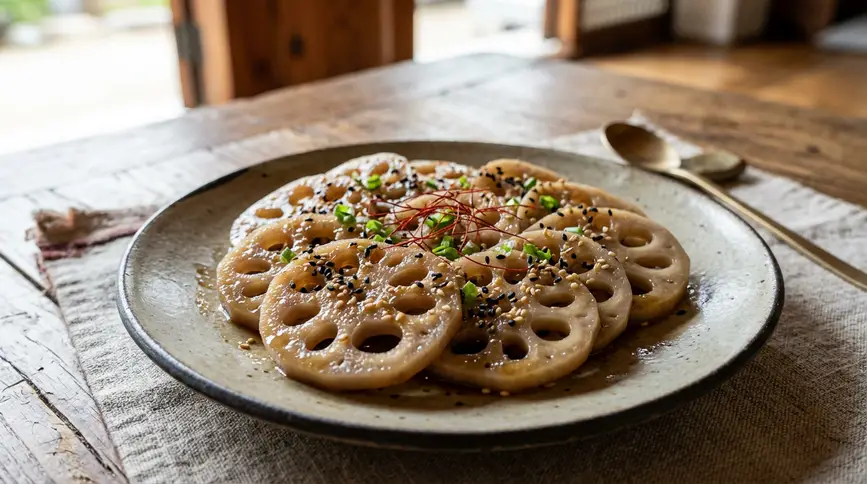
💡 Want to learn more about Lotus Root (Yeon-geun)?
We’ve put together a complete guide on its incredible health benefits and delicious Korean recipes.
Go check this out ↗
3. Spring Cabbage Pancake (Bomdong-Jeon)
A pancake bursting with the scent of spring! This one just makes you crave a glass of makgeolli (Korean rice wine). I was truly surprised at how easy it was to whip up. The slight sweetness of bomdong cabbage and the crispy texture of the batter? A match made in heaven!
* Ingredients: Bomdong (spring cabbage) 1/4 head, pancake mix 1/2 cup, water 1/2 cup, a little cooking oil.
* How-to: Briefly blanch bomdong in lightly salted water. (Don’t overdo it, or it’ll get mushy!) Mix pancake mix with water to make a batter. (I sometimes add a touch of perilla seed powder here for an extra nutty flavor!) Heat cooking oil in a pan, dip the bomdong in the batter, and fry until golden brown on both sides.
💡 Want to explore more about Korean Spring Cabbage (Bomdong)?
We’ve put together a complete guide featuring its seasonal benefits and mouthwatering recipe ideas.
Go check this out ↗
4. Aster Leaf Crepe (Chwinamul-Bingtteok)
This dish is perfect for a special occasion or when you’re hosting guests. It feels so elaborate but isn’t as hard as it looks! The aromatic chwinamul (aster leaves) and the chewy buckwheat crepe are a truly delightful combination.
* Ingredients: Chwinamul 100g, a pinch of coarse salt, Korean soup soy sauce 2 tsp, perilla oil 2 tsp. Buckwheat flour 2 tsp, wheat flour 3 tsp, starch flour 1 tsp, water, home-style soy sauce 2 tsp. Spicy dipping sauce: Gochujang (Korean chili paste) 1 tbsp, vinegar 1 tbsp, rice syrup 1/2 tbsp, a pinch of sesame seeds.
* How-to: Clean and trim 100g of chwinamul, then blanch in boiling water with a pinch of coarse salt. Rinse in cold water and squeeze out excess moisture. Season the blanched chwinamul with 2 tsp Korean soup soy sauce and 2 tsp perilla oil. Sift buckwheat flour (2 tsp), wheat flour (3 tsp), and starch flour (1 tsp) together. Mix with water and 2 tsp home-style soy sauce to make a thin batter. (If it’s too thick, the crepes will be heavy.) Lightly oil a pan, pour in a ladle of buckwheat batter, and cook into a crepe. Roll the seasoned chwinamul inside the cooked crepe. Slice into bite-sized pieces and serve with the spicy dipping sauce. (A simple soy sauce dip works well too!)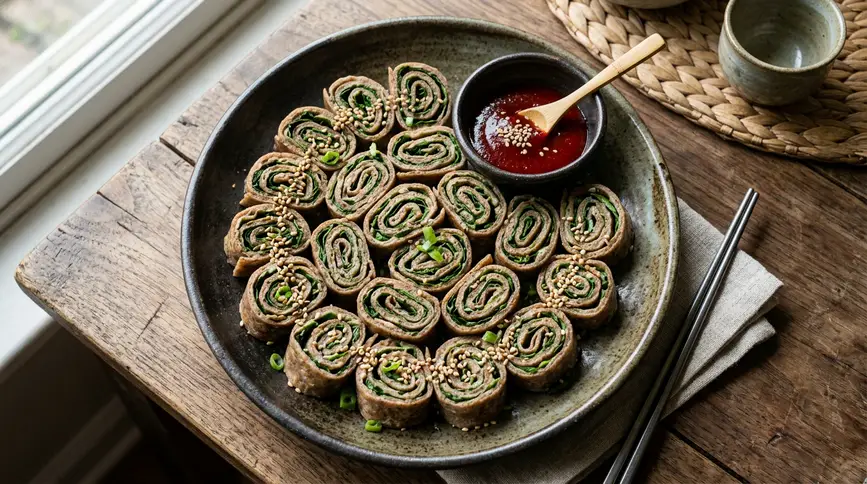
💡 Want to unlock the aromatic charm of Korean Wild Greens (Chwinamul)?
We’ve put together a complete guide featuring its seasonal health benefits and authentic, flavorful recipes.
Go check this out ↗
5. Mugwort and Root Vegetable Steamed Cake (Ssukbeomuri Ppuri-tteok)
The fragrant scent of mugwort combined with a colorful array of root vegetables! The whole house smells amazing when this is steaming. It’s nutritious and incredibly delicious, too!
* Ingredients: Mugwort 100g, pumpkin 30g, sweet potato 30g, beetroot 30g, chestnuts 5-6 pieces. Rice flour 250g, salt 1 tsp, sugar 2 tsp, water.
* How-to: Clean and trim 100g of mugwort, wash thoroughly, and remove excess water. Dice pumpkin (30g), sweet potato (30g), beetroot (30g), and chestnuts (5-6 pieces) into small cubes. (Soak beetroot in water for about 30 minutes, then pat dry.) Mix 250g rice flour, 1 tsp salt, and 2 tsp sugar, then sift once. Add water to the rice flour mixture, then combine with mugwort, pumpkin, sweet potato, beetroot, and chestnuts. (It should just barely hold together when you gently squeeze it with your hand.) Line a steamer with a damp cloth, and when steam rises, add the mixture. Cover and steam over high heat for about 20 minutes. Once cooked, let it rest for 5 minutes with the lid on, then cool before serving. (Poke it with a chopstick; if nothing sticks, it’s done!)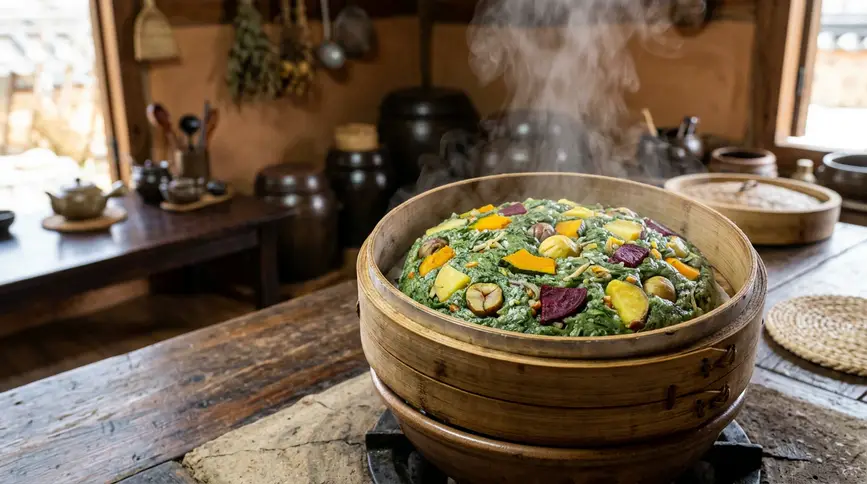
💡 Want to discover the soothing secrets of Korean Mugwort (Ssuk)?
We’ve put together a complete guide featuring its seasonal wellness benefits and traditional tea rituals.
Go check this out ↗
6. Enoki Mushroom Soy Sauce Pickles
When you’ve lost your appetite, this is a total game-changer! It’s delightfully sweet, tangy, and savory. Making a batch means you’ll always have a reliable side dish ready. The chewy texture of enoki mushrooms is truly captivating.
* Ingredients: Enoki mushrooms 300g. Braising liquid: Dried kelp 1 sheet, vegetable broth 1 cup, dried shiitake mushrooms 3 pieces, Korean radish 200g, ginger 30g, dried jujubes 5 pieces, water 6 tsp. Seasoning: Soy sauce 1/2 cup, rice syrup 2 tsp, sugar 2 tsp, brown rice vinegar 2 tsp.
* How-to: Trim the ends of 300g enoki mushrooms, then blanch them briefly in boiling water to remove any slight “earthiness.” Prepare the braising liquid by combining dried kelp (1 sheet), vegetable broth (1 cup), dried shiitake mushrooms (3 pieces), Korean radish (200g), ginger (30g), dried jujubes (5 pieces), and water (6 tsp). Bring to a boil. (Add kelp to cold water, then remove after 2-3 minutes of boiling.) After removing the kelp, add 1/2 cup soy sauce, 2 tsp rice syrup, and 2 tsp sugar to the pot. Simmer gently over low heat for 10-15 minutes. Before cooling, stir in 2 tsp brown rice vinegar. Once cooled, pour over the prepared enoki mushrooms. Cover the dish with the previously removed kelp and garnish with jujube flowers or other decorations. It’s ready to eat in 1-2 hours! (It tastes even better chilled in the fridge!)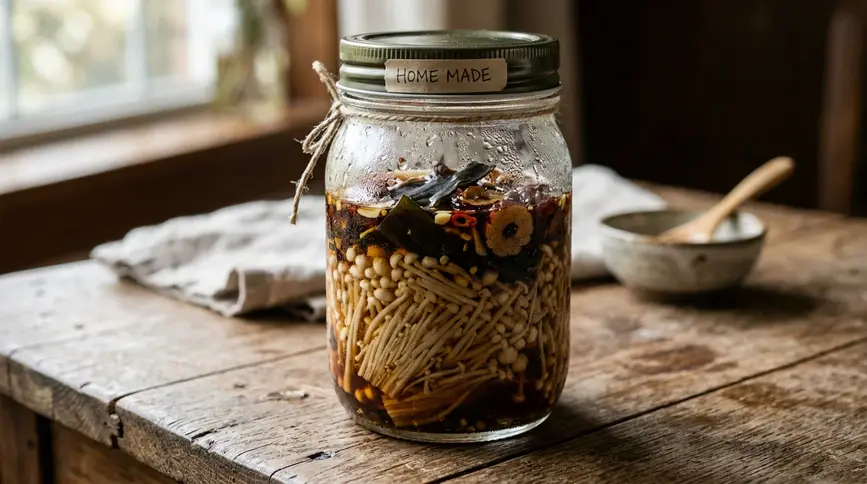
💡 Want to explore the crunchy delights and health benefits of Korean Enoki Mushrooms?
We’ve put together a complete guide featuring its nutritional perks and quick, savory recipe ideas.
Go check this out ↗
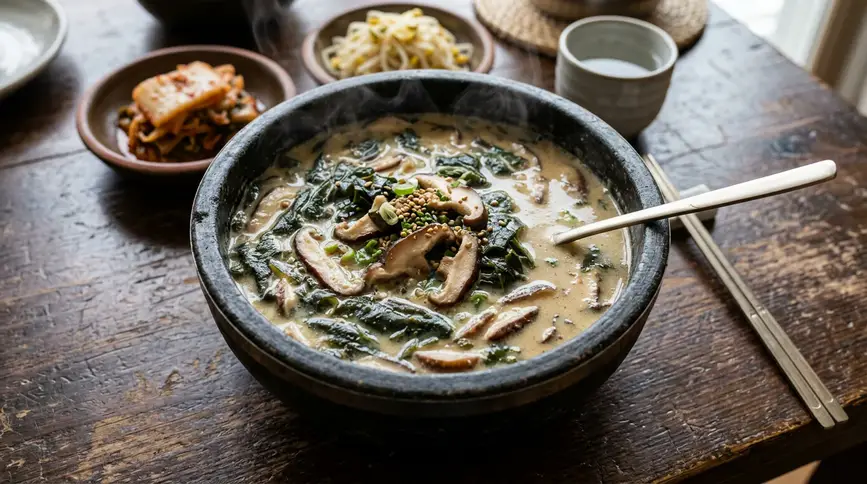
7. Shiitake Mushroom and Perilla Seed Seaweed Soup (Pyogo Beoseot Deulkkae Miyeokguk)
This perilla seed seaweed soup boasts a wonderfully savory and deep flavor! The shiitake mushrooms add an even richer umami punch. It feels so comforting and gentle on your stomach. Temples often achieve this profound depth using just rehydrated shiitake mushroom water, without any anchovies—it really speaks to the purity of their cooking!
* Ingredients: Dried seaweed 10g, dried shiitake mushrooms 3 pieces, perilla seed powder 2 tbsp, Korean soup soy sauce 1 tbsp, a dash of sesame oil. (For stock: Water 4 cups, dried anchovies 10, dried kelp 1 sheet (5x5cm) – Note: For temple style, use only shiitake mushroom rehydration water for stock.)
* How-to: Rehydrate dried seaweed and shiitake mushrooms in water. (Don’t discard the shiitake water; it’s your flavorful stock!) Use the rehydrated shiitake water (and anchovies/kelp if not strictly temple-style) to make your broth. Sauté the rehydrated seaweed and shiitake mushrooms (and minced garlic, if not strictly temple-style) in a pot with sesame oil. Pour in the broth and bring to a boil. Once boiling, add perilla seed powder and Korean soup soy sauce, then simmer for a bit longer. (Adding perilla seed powder at the end keeps it nutty and less chalky!)
💡 Want to taste the rich, nutty flavor of Korean Shiitake & Perilla Seed Soup?
We’ve put together a complete guide featuring its savory health benefits and comforting home-style recipes.
Go check this out ↗
8. Grilled Deodeok Root (Deodeok-Gui)
This grilled deodeok root is both subtly bitter and wonderfully sweet and spicy! The fragrant aroma of deodeok instantly whets your appetite. It’s fantastic as a side dish or a special treat. Preparing it can be a bit of a process, but the flavor is absolutely worth every bit of effort!
* Ingredients: Deodeok root 200g, gochujang 2.5 tbsp, vinegar 1 tsp, sugar 1 tbsp, perilla oil 2 tbsp, sesame seeds 1/2 tsp, bamboo salt (jukyeom) 1/2 tsp.
* How-to: Peel deodeok root, slice it flat, and gently flatten with a rolling pin. (Don’t hit it too hard, or it might break!) In a bowl, mix gochujang, vinegar, sugar, and bamboo salt. (I sometimes add a tiny bit of rice syrup for extra glaze and flavor!) Coat the deodeok with the sauce and let it marinate for about 30 minutes so the flavors can soak in. Heat perilla oil in a pan and grill the deodeok. (Cook slowly over low heat to prevent burning.) Arrange the grilled deodeok on a plate and sprinkle with sesame seeds.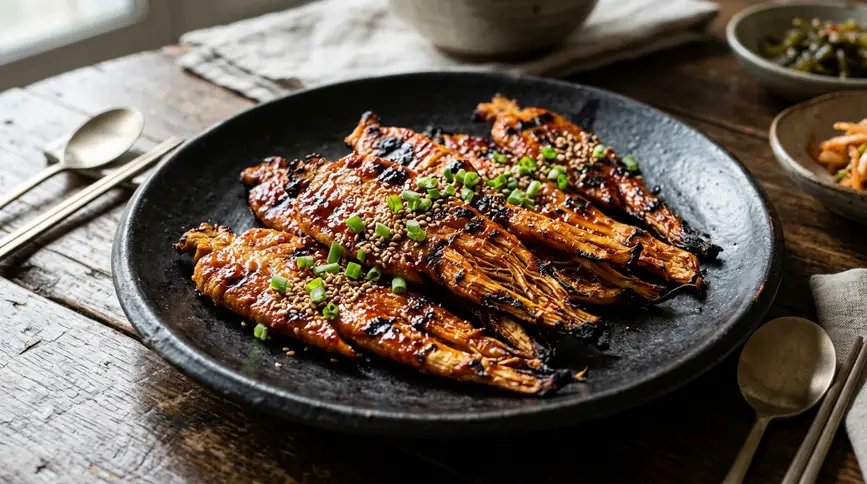
💡 Want to discover the wild vigor of Deodeok, Korea’s natural ginseng alternative?
We’ve put together a complete guide featuring its rich health benefits and mouthwatering grilling recipes.
Go check this out ↗
9. Stir-fried Eggplant (Gaji-Bokkeum)
This stir-fried eggplant is soft, yet delightfully chewy, and absolutely delicious with the absorbed seasoning! Even kids who usually dislike eggplant often enjoy this one. For watery vegetables like eggplant, the order of cooking is crucial!
* Ingredients: Eggplant 3 pieces, cooking oil 3-4 tbsp, sesame oil 1 tbsp, a little sesame seeds. (For temple style: omit minced garlic, green onions, and chili peppers.) Stir-fry sauce: Soy sauce 3 tbsp, sugar 1 tbsp, chili powder 1/2 tbsp. (For temple style: chili powder can be omitted.)
* How-to: Wash eggplants, trim the stems, cut into 5cm pieces, then slice each piece lengthwise into about 6 wedges. (This step can be simplified for temple style.) Prepare the stir-fry sauce by mixing soy sauce, sugar, and chili powder. Heat oil in a hot pan. Add eggplant and stir-fry until it softens. (Covering it briefly can speed up the softening process.) Push the cooked eggplant to one side of the pan, pour in the mixed sauce, and let it bubble. Mix the sauce and eggplant thoroughly. Drizzle with sesame oil and sprinkle with sesame seeds to finish. (Tip: Stir-fry the eggplant enough to evaporate moisture and soften it before adding the sauce. This prevents the dish from getting watery and keeps it flavorful until the last bite!)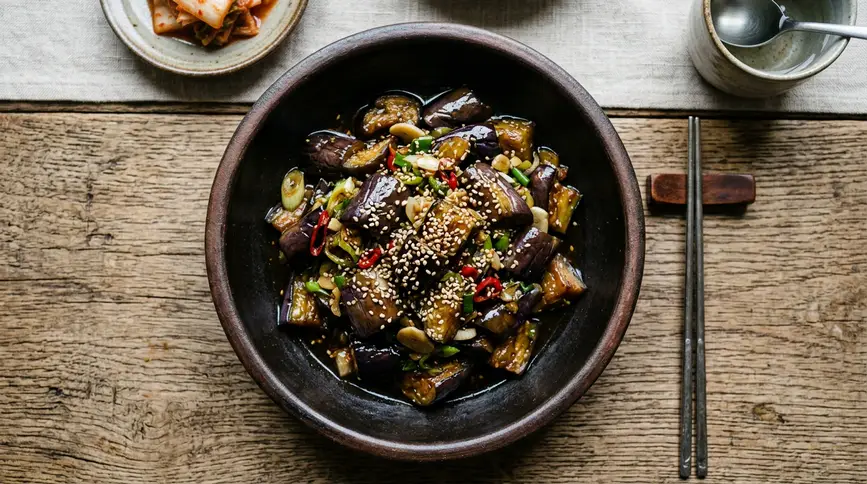
10. Stuffed and Grilled Eggplant (Gaji-Gui)
A true revelation of eggplant’s potential! Stuffing it with a mushroom filling and grilling it creates a sophisticated dish that’s perfect for entertaining. The tenderness of eggplant, the chewiness of shiitake mushrooms, and the fragrant perilla oil come together beautifully.
* Ingredients: Medium eggplant 1 piece, dried shiitake mushrooms 4 pieces, perilla oil 3 tbsp, soy sauce 1 tbsp, rice syrup 1/2 tbsp, sugar 1 tsp, all-purpose flour 2 tbsp, black pepper 1/4 tsp.
* How-to: Rehydrate dried shiitake mushrooms in lukewarm water, squeeze out excess water, and finely mince into 0.5cm pieces. Season the minced shiitake with soy sauce, black pepper, rice syrup, and sugar, then stir-fry in a pan. Trim the stem of the eggplant, cut it lengthwise in half. On the cut side, make two parallel slits lengthwise, being careful not to cut through the skin. Heat perilla oil in a pan, cook the eggplant skin-side down until slightly tender, then flip and gently press down to brown both sides. Let the eggplant cool. Lightly dust the slit side with flour, then spread a layer of the stir-fried shiitake mushroom filling. Gently press, then dust with a little more flour on top. (The flour acts as a ‘glue’ to keep the filling in place.) Heat a generous amount of perilla oil in a pan, place the eggplant skin-side down, cook briefly, then carefully flip and brown nicely.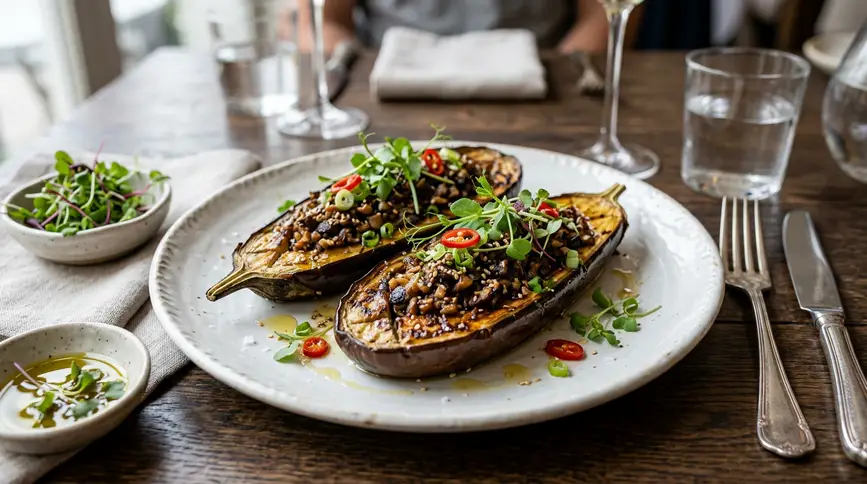
💡 Want to master the soft, tender flavor of Korean Eggplant (Gaji Muchim)?
We’ve put together a complete guide featuring its health benefits and authentic side dish recipes.
Go check this out ↗
Why Embark on a Temple Food Journey Today?
So, how did you like these recipes, my friends? Much simpler than you initially thought, right?!
Temple food is so much more than just filling your belly; it’s an opportunity to connect with nature and truly take care of yourself through what you eat. Using seasonal ingredients means it’s packed with nutrients and, because it’s not overly stimulating, it’s incredibly gentle on your stomach. While it might feel a little unfamiliar at first, I promise, once you experience its clean, deep flavors, you’ll be completely smitten!
For me, the biggest change I noticed while cooking temple food was a profound sense of ‘inner peace.’ The process of carefully preparing each ingredient and cooking felt like a form of meditation itself. My busy mind seemed to quiet down, and the time spent focusing solely on the food felt incredibly precious. It’s a fantastic antidote to our fast-paced modern lifestyle, offering a chance to slow down and practice mindfulness in the kitchen. In a world where mental wellness and sustainable eating matter more than ever, temple food stands out as a beautiful example of how we can nourish both body and mind.
I really encourage you to set aside some time this evening or weekend to try making some temple food. A modest yet healthy and delicious meal can bring so much comfort and joy to your body and mind. Why not start with just one of the recipes I shared today?
I’m rooting for your healthy and happy kitchen adventures! 💖
FAQ: Your Burning Questions About Temple Food, Answered!
Here are some common questions I hear about temple food, especially from folks in Canada and the US who are new to it!
Q1. Is temple food entirely vegan?
A1. Most temple food dishes strictly avoid animal products, making them largely vegan-friendly. However, historically, some temples might use honey as a medicinal ingredient. Also, specific temples or individual monastics might make exceptions based on health conditions (the jibyeong gaecha principle). If you follow a strict vegan diet, it’s always best to confirm ingredients.
Q2. Why does temple food avoid oshinchae (the five pungent vegetables: green onions, garlic, chives, wild garlic, and heunggeo/asafetida)?
A2. In Buddhism, these five pungent vegetables are believed to have stimulating properties that can disturb a practitioner’s mental clarity and emotional stability, hindering their meditative practice. Avoiding them helps maintain inner peace and focus on spiritual cultivation. It’s a fascinating aspect of their mindful eating philosophy!
Q3. Where can I find more temple food recipes?
A3. You can find more temple food recipes in traditional temple food cookbooks, specialized temple food blogs, or on websites like the Korean Temple Food Cultural Center (한국사찰음식문화체험관). Of course, the recipes in this very post are a fantastic starting point!
Q4. Can a complete beginner easily try making temple food?
A4. Absolutely, yes! Temple food fundamentally focuses on simple, natural flavors and cooking methods, so you don’t need any special skills to follow along. I’d recommend starting with basic side dishes first, just like the burdock root or lotus root recipes here. You’ll be surprised!
Q5. Is temple food beneficial for weight management?
A5. Yes, it certainly can be! Temple food generally contains very little oil or artificial additives, relying heavily on seasonal vegetables and grains. This usually means it’s lower in calories and provides a balanced nutritional profile, which can definitely support healthy weight management goals.
Q6. Isn’t temple food a bit bland?
A6. Temple food distinguishes itself by highlighting the deep, subtle flavors of natural ingredients rather than relying on strong, stimulating tastes. At first, it might seem a bit plain if you’re used to more intense flavors. But gradually, you’ll begin to appreciate the true taste of each ingredient, and your stomach will feel wonderfully comfortable. It’s an acquired taste that brings immense satisfaction!
Q7. What kind of seasonings are commonly used in temple food?
A7. Temple food utilizes natural seasonings instead of artificial ones. Key ingredients include doenjang (fermented soybean paste), ganjang (soy sauce), gochujang (fermented chili paste), perilla oil, sesame oil, perilla seed powder, kelp broth, and shiitake mushroom powder. These natural enhancers provide incredible depth!
Q8. Do you have any tips for making temple food taste even better?
A8. The most crucial tip is to use fresh, seasonal ingredients! They naturally taste superior. Also, leveraging natural seasonings effectively will deepen the umami and overall flavor profile significantly. Patience and mindfulness in preparation also make a huge difference, I’ve found.
Q9. How can I eat temple food for a whole week without getting tired of it?
A9. To keep things interesting, embrace variety! Utilize a diverse range of seasonal ingredients and explore different cooking methods: pickles (jangajji), various seasoned vegetables (namul), steamed dishes (jjim), stir-fries (bokkeum), and pancakes (jeon). Mixing it up ensures you won’t get bored!
Q10. What are some recommended temple food recipes for beginners to easily make at home?
A10. For beginners, I highly recommend starting with simple side dishes like Braised Burdock Root, Steamed Lotus Root, and Shiitake Mushroom Perilla Seed Seaweed Soup. The Deodeok Gui (Grilled Deodeok Root) is also a fantastic, flavorful option once you get the hang of basic preparation!
Q11. Are there specific health benefits associated with a temple food diet?
A11. Absolutely! Temple food is generally rich in fiber, vitamins, and minerals due to its heavy reliance on plant-based ingredients. It’s known to aid digestion, promote gut health, reduce inflammation, and help maintain stable blood sugar levels. Many people report feeling lighter and more energized.
Q12. Can I adapt these recipes to use ingredients commonly found in North America?
A12. You betcha! Many traditional Korean ingredients have excellent substitutes. For example, specific Korean radishes can often be swapped for daikon radish, and certain wild greens might be replaced with spinach or kale. The core principles of fresh, seasonal, and natural flavors remain the same, so feel free to experiment!
Q13. Is temple food becoming popular in Western countries?
A13. Yes, there’s a definite growing trend! With the rise of veganism, plant-based diets, and mindful eating movements in North America and Europe, temple food’s philosophy and delicious flavors are gaining significant traction. Chefs are exploring its techniques, and wellness retreats often feature it. It’s a true global phenomenon in 2025!
Q14. How does the concept of “seasonality” in temple food apply to urban dwellers?
A14. Even in urban areas, you can embrace seasonality! Look for farmers’ markets, local co-ops, or even the seasonal produce sections of your grocery store. The idea is to choose what’s naturally abundant and fresh at a given time, which often means better flavor and lower cost, too!
Q15. What’s the main difference between general Korean vegan food and temple food?
A15. While both are plant-based, the key differentiator is oshinchae. General Korean vegan cuisine might use garlic, green onions, and other pungent vegetables for flavor, whereas temple food strictly avoids them. Temple food also emphasizes a deeper spiritual and mindful approach to cooking and eating.
Q16. Are there specific tools or cookware I need for temple food?
A16. Not really! Most temple food can be prepared with standard kitchen tools: pots, pans, cutting boards, and knives. A good steamer is always handy for many dishes, but even a makeshift steamer can work. Simplicity is key!
Q17. Can I store temple food for later consumption?
A17. Many temple food dishes, especially side dishes like jorim (braised items) and jangajji (pickles), are designed to be stored and enjoyed over several days. Fresh namul (seasoned vegetables) are best eaten fresh, but cooked items like those mentioned can usually last 3-5 days in the fridge.
Q18. How can I introduce temple food to picky eaters or children?
A18. Focus on milder, slightly sweeter dishes first! Braised Burdock Root, Steamed Lotus Root, and even the Steamed Mugwort and Root Vegetable Cake can be quite appealing. The key is to highlight the natural sweetness and gentle textures without overwhelming them with unfamiliar flavors.
Q19. What’s the best way to develop a palate for the subtle flavors of temple food?
A19. Start by gradually reducing your intake of highly processed and intensely flavored foods. The more you eat clean, natural foods, the more sensitive your taste buds will become to the nuanced flavors in temple cuisine. It’s a journey of re-education for your palate, and it’s incredibly rewarding!
Q20. Are there any temple food cooking classes available in North America?
A20. Yes, there are! As its popularity grows, some Korean cultural centers, culinary schools, or even Buddhist temples in major North American cities (like Toronto, Vancouver, New York, or Los Angeles) have started offering workshops or classes. Online resources and virtual classes are also becoming increasingly common in 2025!
🌿 Korean Temple Food Complete Guide Series
Embrace the art of mindful eating with our curated guide series! Bookmark this section and explore these essential resources to deeply understand the philosophy, ingredients, and healing recipes of Korean temple cooking.
-
- • Comprehensive Guide (Hub):
Korean Temple Food: A Beginner’s Guide to Mindful Eating
- • Comprehensive Guide (Hub):

Written by WhatIneed.kr
Having lived in South Korea, the US, and Canada, I love experiencing and exploring diverse cultures and dietary habits. As a dedicated food guide, I explore the rich traditions of Korean cuisine, specializing in authentic home cooking, traditional fermentation, and peaceful Korean temple food.