As the biting chill of winter begins to lose its grip and the subtle scent of thawing earth fills the air, a very special guest arrives at the dining table. For those who appreciate the delicate cycles of seasonal eating, there is no greater “Spring-signal” than the arrival of Bomdong (봄동, spring cabbage). This isn’t your typical, tightly-wrapped Napa cabbage found in the supermarket year-round. It is a resilient, sun-seeking green that spreads its leaves wide across the frosted soil, absorbing every bit of early sunshine. In the world of culinary delights, Bomdong represents a transition—a bridge between the heavy, fermented stews of winter and the vibrant, fresh harvests of the warmer months.
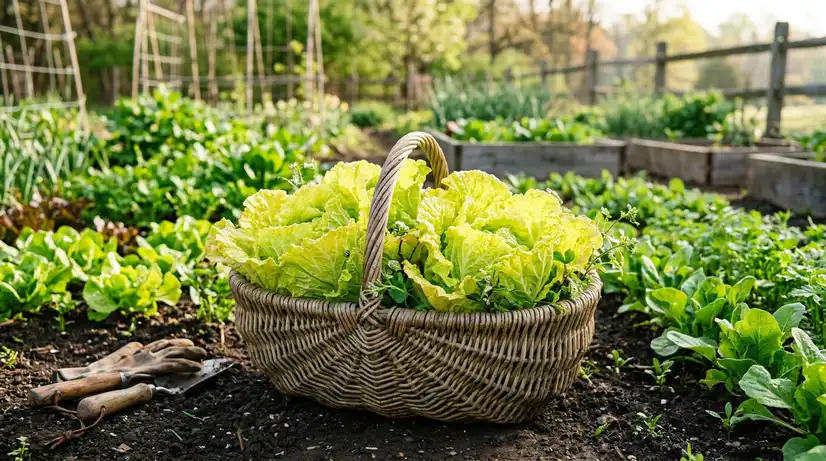
To the uninitiated, it might look like a cabbage that simply gave up on forming a head. However, its flat, sprawling shape is a mark of its strength. Known colloquially as “Flat cabbage,” it grows this way to survive the harsh winter winds, hugging the ground for warmth. This struggle produces a texture that is remarkably crunchy and a flavor that is surprisingly sweet, with a nutty finish that puts common greens to shame. In this comprehensive guide, we will explore why this humble cabbage is considered a “Vitamin booster,” how it transforms into the iconic “Fresh Bomdong Salad,” the comforting “Blanched Bomdong Seasoned with Soybean Paste,” and the soul-warming “Bomdong and Soybean Paste Stew.”
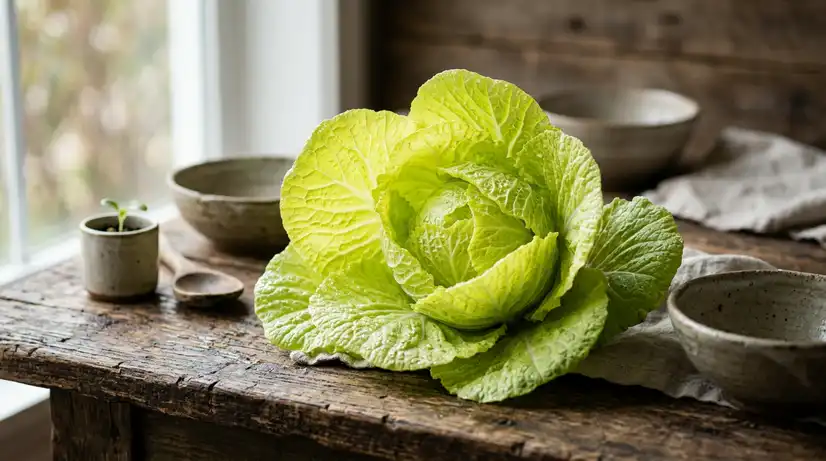
The Resilient Herald: Why Bomdong is the Ultimate Spring-Signal
In many cultures, the first signs of spring are cherry blossoms or tulips. But for the discerning palate, the true “Spring-signal” is found in the vegetable aisle or the local farmers’ market. Bomdong (봄동, spring cabbage) is unique because it is planted in the late fall and survives the entire winter outdoors. While other vegetables would wither in the sub-zero temperatures, Bomdong undergoes a fascinating physiological change. To prevent its water content from freezing, the plant converts its starches into sugars, resulting in a natural sweetness that is much more pronounced than that of standard cabbage.
The physical appearance of this “Flat cabbage” is its most distinguishing feature. Because it doesn’t form a compact ball, every single leaf is exposed to the elements and the sun. This exposure allows for increased chlorophyll production and a tougher, crunchier cell structure. When you hold a head of Bomdong, you aren’t just holding a vegetable; you are holding the concentrated essence of survival and renewal. It is the first green to grace the Bopsang (밥상, traditional dining table) after a long season of stored root vegetables and dried greens.
Culturally, eating Bomdong is a ritual of shaking off the winter lethargy. In the transition from February to March, the body often feels heavy and tired—a phenomenon sometimes referred to as “spring fever.” The vibrant crunch of these leaves serves as a sensory wake-up call. It reminds us that the earth is waking up, and so should we. The aesthetic of the vegetable itself, resembling a blooming green rose against the dark earth, makes it a centerpiece of seasonal appreciation.
A Nutritional Powerhouse: The Ultimate Vitamin Booster
If you are looking for a natural “Vitamin booster” to kickstart your metabolism and fortify your immune system, look no further than Bomdong. Because it grows in the open air and fights through the frost, it packs a nutritional punch that far exceeds its greenhouse-grown cousins. It is particularly famous for its high concentration of Vitamin C and Beta-carotene. These antioxidants are essential for repairing the skin after the drying effects of winter heating and for protecting the body against the fluctuating temperatures of early spring.
The nutritional profile of Bomdong is an impressive list of essentials. It is rich in potassium, calcium, and phosphorus. Potassium is crucial for managing sodium levels in the body and regulating blood pressure, which is often a concern when consuming the salty fermented foods common in winter diets. Furthermore, the high fiber content in Bomdong acts as a natural broom for the digestive system, promoting gut health and relieving the constipation that can often accompany a sedentary winter lifestyle.
For those concerned with anemia or general fatigue, the iron and mineral content in these greens provides a steady energy lift. Unlike synthetic supplements, the nutrients in Bomdong are highly bioavailable, meaning the body absorbs them easily. It truly is nature’s multivitamin, wrapped in a crunchy, delicious leaf. Whether consumed raw or lightly cooked, it provides a rush of vitality that is perfect for the “New Year, New Me” mindset that often takes hold as the weather warms.
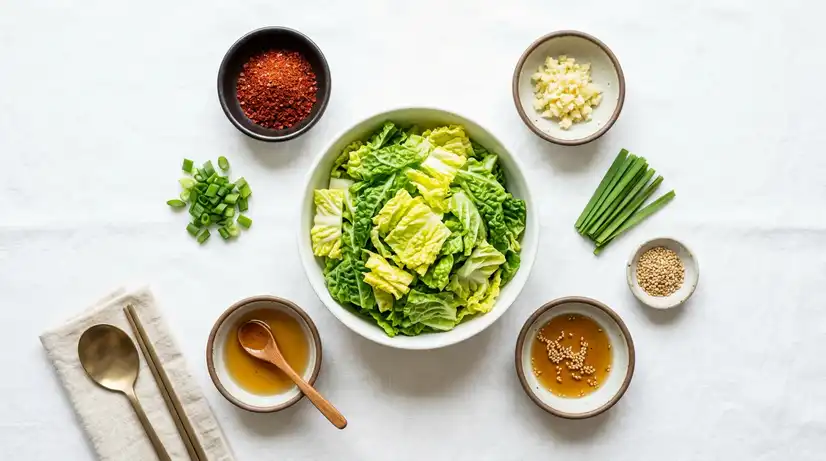
The Perfect Crunch: Fresh Bomdong Salad (Geotjeori)
The most popular way to enjoy this seasonal delicacy is through Bomdong Geotjeori (봄동 겉절이), or “Fresh Bomdong Salad.” Unlike traditional Kimchi, which requires a long fermentation process and salt-wilting, Geotjeori is made to be eaten immediately. This preserves the maximum “Vitamin booster” benefits and emphasizes the signature crunch of the “Flat cabbage.”
To prepare this salad, the Bomdong is separated into individual leaves and washed thoroughly to remove any grit from the fields. The larger leaves are torn by hand rather than cut with a knife; there is an old culinary belief that tearing the leaves preserves the fiber structure and allows the dressing to cling better to the rugged edges. The dressing is a masterclass in balance: the spiciness of Gochugaru (고춧가루, red chili flakes), the umami of Myeolchi-aekjeot (멸치액젓, anchovy fish sauce), the pungent kick of minced garlic, and the subtle sweetness of Maesil-cheong (매실청, plum extract).
When you toss the leaves in this vibrant red dressing, the goal is not to bruise them but to coat them lightly. A final drizzle of toasted sesame oil and a sprinkle of sesame seeds adds a layer of nuttiness that complements the cabbage’s natural sweetness. The result is a salad that hits every taste bud—salty, sweet, spicy, and savory. It is the perfect accompaniment to a bowl of freshly steamed rice or a piece of grilled protein. The “Fresh Bomdong Salad” is more than just a side dish; it is a celebration of freshness that commands attention on any dinner table.
Earthy and Wholesome: Blanched Bomdong Seasoned with Soybean Paste
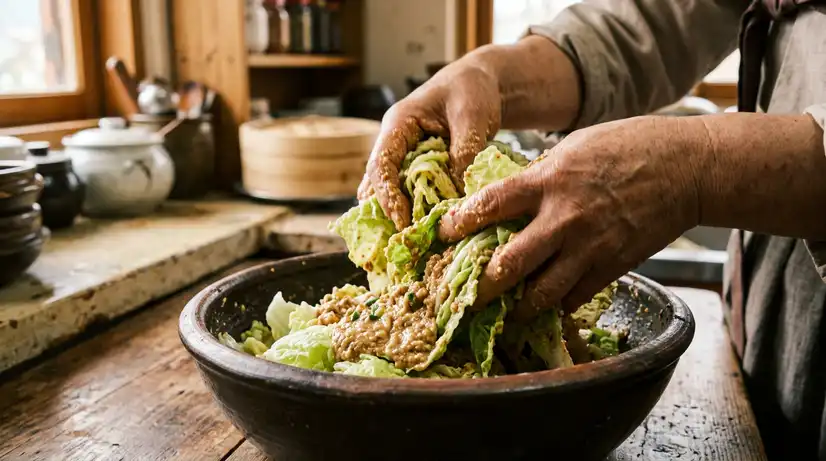
For those who prefer a more mellow and tender texture, “Blanched Bomdong Seasoned with Soybean Paste,” known as Bomdong Doenjang Muchim (봄동 된장 무침), is a comforting alternative. This dish highlights the deeper, earthier notes of the cabbage by pairing it with Korea’s most beloved fermented staple: Doenjang (된장, fermented soybean paste).
The secret to this dish lies in the blanching process. The Bomdong is plunged into boiling salted water for a very brief moment—just long enough for the color to turn a vivid, electric green, but not long enough to lose its structural integrity. It is then immediately shocked in ice-cold water. This technique locks in the vitamins and ensures the cabbage remains “snappy” even though it has been cooked. After squeezing out the excess water, the cabbage is massaged with a mixture of Doenjang, garlic, and perhaps a touch of Gochujang (고추장, red chili paste) for a bit of depth.
This preparation is a favorite among those who appreciate the “Slow Food” movement. The fermentation of the soybean paste introduces beneficial probiotics, which work in tandem with the cabbage’s fiber to support a healthy microbiome. The flavor profile is savory and deeply satisfying, reminiscent of the traditional countryside kitchens where seasonal greens were always handled with the utmost respect. It is a humble dish, yet it carries the weight of centuries of culinary wisdom, proving that you don’t need expensive ingredients to create a gourmet experience.
Warming the Soul: Bomdong and Soybean Paste Stew
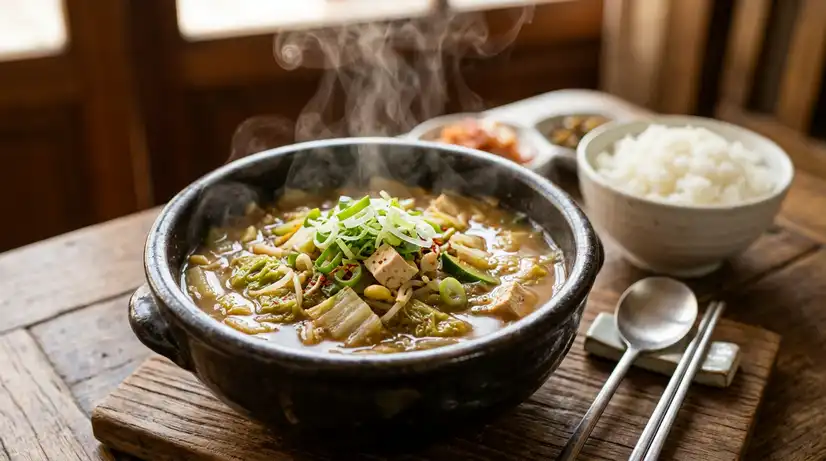
When the spring breeze still carries a hint of winter’s bite, there is nothing more restorative than “Bomdong and Soybean Paste Stew,” or Bomdong Doenjang-guk (봄동 된장국). While most greens lose their appeal when boiled, Bomdong is remarkably sturdy. Its leaves hold their shape and texture, and as they simmer, they release their natural sugars into the broth, creating a soup that is naturally sweet and incredibly soothing.
The foundation of a great Bomdong Doenjang-guk is a high-quality broth. Traditionalists often use a base of dried anchovies and kelp, or Ssal-tteumul (쌀뜨물, the starchy water from rinsing rice), which adds a velvety mouthfeel to the soup. Once the broth is bubbling, Doenjang is dissolved through a fine mesh strainer to ensure a smooth, elegant consistency. Thinly sliced radish is often added to provide a refreshing “coolness” to the hot soup, and a spoonful of minced garlic rounds out the aromatics.
As the Bomdong leaves wilt into the savory broth, they absorb the complex flavors of the fermented beans. For a heartier version, many families add small pieces of beef brisket or firm tofu, turning the soup into a complete meal. Interestingly, despite being cooked, the cabbage retains a significant portion of its nutritional value, making this stew a warm, liquid “Vitamin booster.” It is the ultimate comfort food for those rainy spring days when you need a hug from the inside out.
Selection and Preparation: How to Master the Flat Cabbage
To truly enjoy the benefits of this seasonal treasure, one must know how to select and prepare it. The peak season for Bomdong is short—typically from January to March. When shopping, look for a head that is wide and flat, with leaves that are vibrant green on the outside and a pale, creamy yellow on the inside. Avoid any heads with yellowing outer leaves or those that feel excessively limp. The “heart” of the cabbage—the small, tender leaves in the center—is the sweetest part and is often saved for the finest salads.
Preparation is key. Because Bomdong grows so close to the ground, its crinkled leaves are experts at trapping soil and grit. It is best to soak the separated leaves in cold water with a splash of vinegar for about five minutes. This helps loosen any stubborn dirt and kills any lingering bacteria. After soaking, rinse the leaves multiple times under running water until the water runs crystal clear. Pat them dry thoroughly; excess water is the enemy of a good Geotjeori dressing, as it dilutes the flavors and prevents the oil from adhering.
Storing Bomdong is relatively simple, though it is best consumed fresh. If you must keep it, wrap it in damp paper towels and place it in a perforated plastic bag in the vegetable crisper of your refrigerator. It will stay crunchy for about 3 to 5 days. However, given its status as a “Spring-signal,” why wait? The sooner you eat it, the more you benefit from its “Vitamin booster” properties and its incomparable seasonal flavor.
💡 Curious about Korean Temple Cuisine?
Discover the ultimate guide to easy, soul-soothing vegan recipes for your daily life.
Go check this out ↗
FAQ
Q: What is the difference between regular Napa cabbage and Bomdong?
A: While they are related, regular Napa cabbage (Baechu) grows into a tight, heavy cylindrical head and is available year-round. Bomdong is a seasonal variety that grows flat against the ground, has a crunchier texture, and is significantly sweeter because it survives the winter frost.
Q: Why is Bomdong called a “Spring-signal”?
A: It is called a “Spring-signal” because it is one of the first fresh green vegetables to be harvested as winter ends. Its arrival in markets is a traditional indicator that the warmer weather of spring is just around the corner.
Q: Is Bomdong very spicy?
A: The cabbage itself is not spicy at all; it is sweet and nutty. The spiciness comes from the way it is prepared, particularly in “Fresh Bomdong Salad” (Geotjeori), which uses red chili flakes. You can easily adjust the spice level to your preference.
Q: Can I eat Bomdong raw?
A: Absolutely! In fact, eating it raw in a “Fresh Bomdong Salad” is the best way to enjoy its signature crunch and maximize the intake of its “Vitamin booster” nutrients like Vitamin C.
Q: How do I clean the “Flat cabbage” properly?
A: Since it grows flat on the ground, dirt often gets trapped in the folds of the leaves. Separate the leaves, soak them in water with a bit of vinegar for 5 minutes, and then rinse them thoroughly under running water at least 2-3 times.
Q: Is Bomdong good for weight loss?
A: Yes, it is excellent for weight loss. It is very low in calories but very high in fiber, which helps you feel full longer and aids in healthy digestion and detoxification.
Q: What does “Vitamin booster” mean in the context of this cabbage?
A: It refers to the high concentration of Vitamin C and Beta-carotene found in Bomdong. Because the plant thrives in harsh conditions, it develops a high density of these antioxidants to protect itself, which in turn benefits the humans who consume it.
Q: Can I use Bomdong in Western-style salads?
A: Definitely! Its crunchy texture makes it a great substitute for romaine or kale. It pairs beautifully with vinaigrettes, nuts, and even fruits like apples or pears.
Q: Why is soybean paste (Doenjang) often used with Bomdong?
A: The savory, salty umami of Doenjang (된장) perfectly balances the natural sweetness of the Bomdong. Additionally, the probiotics in the fermented paste combined with the cabbage’s fiber make for a very healthy, gut-friendly meal.
Q: How long does the Bomdong season last?
A: The season is quite short, typically peaking from late January through March. By the time the weather gets truly hot, the cabbage loses its sweetness and characteristic crunch, so it’s best to enjoy it while it’s in its prime “Spring-signal” window.

Written by WhatIneed.kr
Having lived in South Korea, the US, and Canada, I love experiencing and exploring diverse cultures and dietary habits. As a dedicated food guide, I explore the rich traditions of Korean cuisine, specializing in authentic home cooking, traditional fermentation, and peaceful Korean temple food.