Hello there, my wonderful friends! It is so incredibly nice to sit down and chat with you today. Having spent over a decade soaking up the vibrant culture of Korea, another ten years embracing the vast, nature-driven lifestyle in Canada, and yet another decade navigating the fast-paced, melting-pot society of the United States, I have experienced a wild spectrum of food cultures. From giant North American fast-food chains to cozy Canadian diners and bustling Korean street markets, I’ve seen it all! But amidst all these culinary adventures, there is one particular dietary approach that completely transformed my relationship with food, and I cannot wait to share it with you: the Korean Temple Food Diet.
When you live a busy, cosmopolitan life across different continents, it is so easy to fall into the trap of heavily processed, quick meals. I remember days in New York and Toronto where my digestion was completely wrecked, and my energy levels were hitting rock bottom. It wasn’t until I reconnected with the traditional temple cuisine of Korea that my body finally found its balance. This isn’t just a trendy diet; it is a profound journey of healing your gut, balancing your mind, and nourishing your soul. Let’s dive deep into this beautiful world together, shall we?!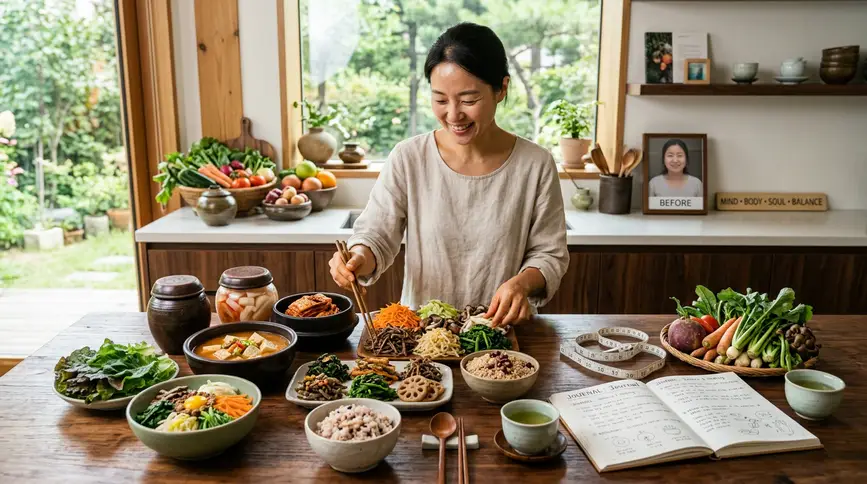
The Philosophy and Science Behind the Zen Diet
You might be wondering, what exactly makes temple food so incredibly effective for weight management and overall health? Well, temple cuisine is essentially the food prepared and consumed by Buddhist monks and nuns during their rigorous ascetic practices. It relies strictly on seasonal, plant-based ingredients sourced directly from nature. But beyond its spiritual roots, the scientific benefits are absolutely mind-blowing!!
First and foremost, this diet is a powerhouse of dietary fiber and low in empty calories. In the typical Western diet found across the US and Canada, the average adult barely consumes 15 grams of fiber daily. However, temple food naturally pushes that number well above 30 grams! Because it utilizes whole vegetables, roots, and seaweeds, it keeps your caloric intake remarkably low while maximizing satiety. You can practically eat a visually massive portion without worrying about calorie overload.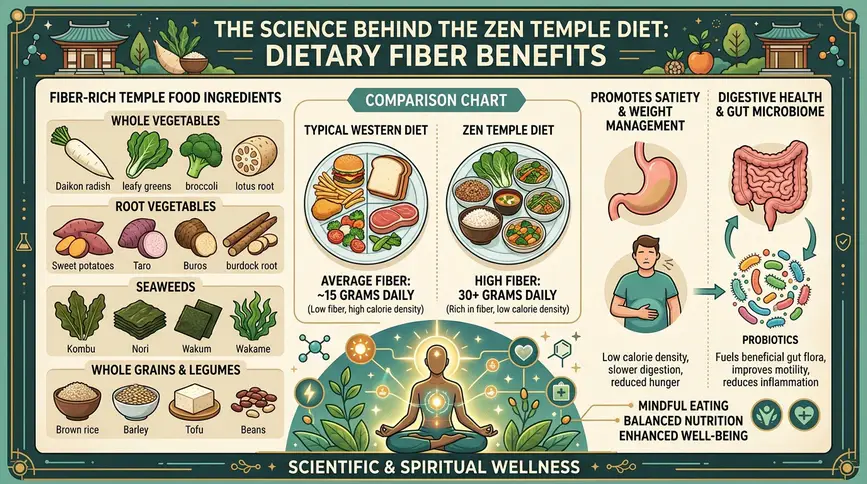
Furthermore, blood sugar management is a huge factor here. Instead of refined white flour or sugar—which are ubiquitous in North American diets—temple cuisine champions whole grains like brown rice, barley, and Job’s tears. These complex carbohydrates have a much lower Glycemic Index (GI), meaning they prevent those dreaded insulin spikes and crashes that lead to sudden cravings. When your blood sugar is stable, your desire to snack on junk food magically disappears!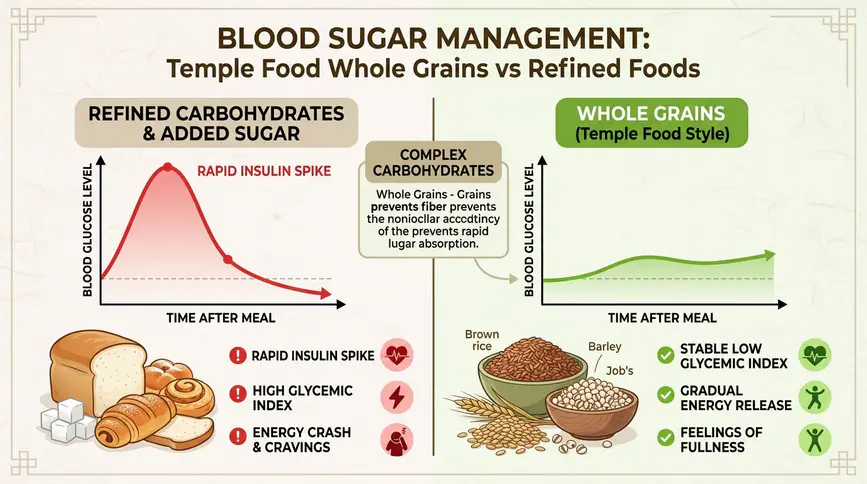
Let’s not forget about cholesterol and gut health 🙂 By entirely eliminating animal fats, this diet works wonders for lowering LDL cholesterol levels. My own lipid panels improved drastically after adopting this lifestyle! Plus, traditional Korean fermented foods like Doenjang (soybean paste) and naturally fermented, low-sodium Kimchi act as incredible natural probiotics. They introduce beneficial microbes into your microbiome, enhancing digestion, boosting immune function, and literally making your skin glow from the inside out.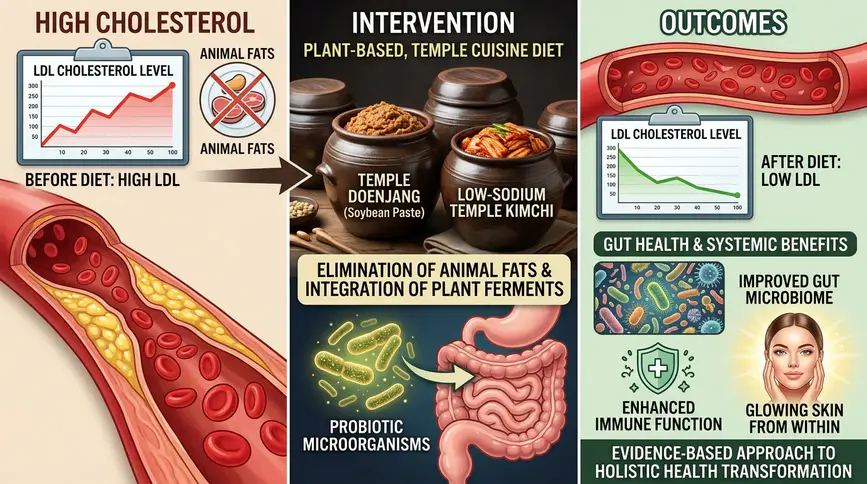
Golden Rules for the Monastic Kitchen
Now, if you want to truly experience the magic of temple food, it is not just about throwing some vegetables into a pan. There are some sacred, time-honored principles you must follow, and I promise you, they will change the way you look at cooking!
Embrace seasonal ingredients with an open heart. When I lived in Canada, I learned the value of eating what the harsh winters and bountiful summers provided. Temple food is exactly like that. Eating seasonally means you are getting vegetables at their absolute peak nutritional value. They are richer in vitamins, more robust in flavor, and honestly, much kinder to your grocery budget!
Here is the kicker: absolutely no Osinchae. What is that, you ask?! Osinchae refers to the five pungent herbs—garlic, green onions, leeks, chives, and wild leeks. In temple philosophy, these ingredients are believed to generate excessive heat and disrupt spiritual meditation. Coming from a mainstream culinary background where garlic is the base of everything, this sounded impossible to me at first! But omitting them forces you to rely on the genuine, subtle flavors of the vegetables themselves. You learn to create depth using kelp broth, mushroom powder, and high-quality sesame oil. It is a culinary revelation!
Of course, animal products are strictly forbidden. Since Buddhism practices non-violence (Ahimsa), meat, fish, eggs, and dairy are completely off the table. To ensure you are getting enough protein—a common concern in fitness-obsessed American culture—you heavily incorporate plant-based proteins like tofu, various beans, and mushrooms.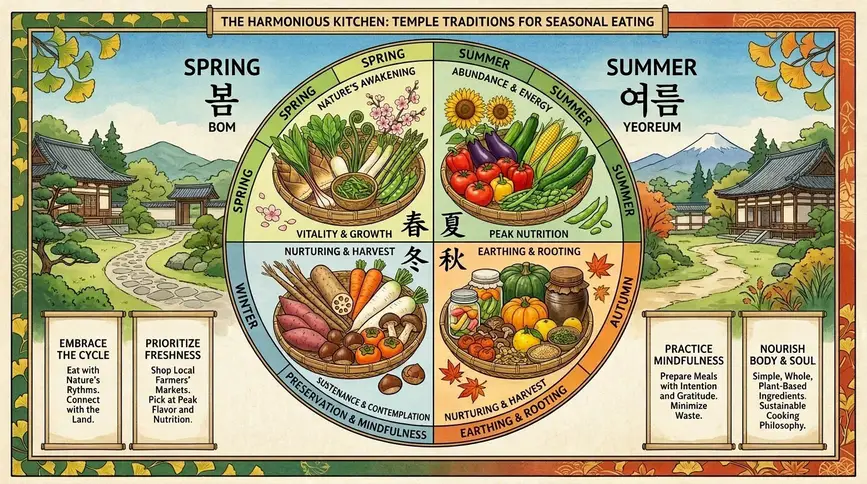
Lastly, keep your cooking methods minimal and your heart grateful. Instead of deep-frying or heavy sautéing, we lean towards steaming, boiling, and gentle braising. And we never, ever waste food. Taking only what you need and finishing every grain of rice is a beautiful practice of mindfulness and environmental sustainability.
Crafting Your Mindful Meal Plan
Transitioning to a temple diet does not mean you have to starve; in fact, it is quite the opposite! Based on a moderate 1200 to 1500 kcal daily intake, you can create a vibrant, deeply satisfying menu. Having lived in diverse food environments, I love showing my Western friends how fulfilling this can be.
For a beautiful morning start, aim for about 300 to 400 calories. A small bowl of steamed brown rice paired with a comforting Doenjang stew made with zucchini, tofu, and a rich kelp broth is perfect. Add a side of low-sodium, vegan Kimchi and some lightly seasoned aster greens. This combination warms the stomach and kickstarts your metabolism gently.
When lunch rolls around, you want something that provides sustained energy without the heavy mid-afternoon slump. A beautiful vegetable Bibimbap is the answer! Use barley rice and top it with gently blanched bracken, bellflower roots, spinach, bean sprouts, and shiitake mushrooms. Instead of drenching it in spicy Gochujang, toss it lightly with aged soy sauce, sesame oil, and crushed sesame seeds. Pair it with a clear radish soup. It is roughly 400 to 500 calories of pure, clean energy.
For dinner, keep it incredibly light and digestible. A half portion of Job’s tears rice, some nourishing seaweed soup (without beef, of course!), stir-fried eggplants, and a refreshing Hijiki seaweed and mashed tofu salad. This 300 to 400 calorie meal ensures your digestive system rests well overnight.
If you ever feel peckish, snack smartly! A handful of almonds, half a steamed sweet potato, or half an apple works wonders. The key here is to rotate your vegetables based on what you can find at your local farmer’s market, keeping the diet diverse and exciting.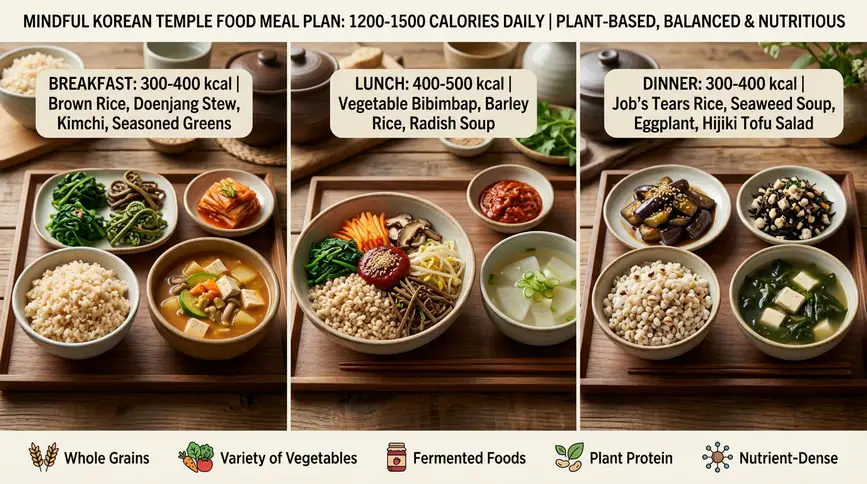
Simple Recipes and Future Global Trends
You might be thinking this sounds amazing but too complicated to cook at home, right? Nonsense! Let me share how easy it is to bring these Zen flavors into your own kitchen, no matter where you live in the world.
Let’s talk about Perilla Seed and Mushroom Soup. It is thick, savory, and incredibly comforting. Simply soak some dried shiitake mushrooms, slice them up, and dice some potatoes and zucchini. Bring a pot of kelp broth to a boil, toss in your veggies, and let them soften. Then, dissolve a generous amount of roasted perilla seed powder in water and stir it into the boiling soup until it thickens beautifully. Season with good quality sea salt or a dash of soup soy sauce. It is creamy without a drop of dairy!
Another favorite is the Hijiki and Tofu Salad. Hijiki is a fantastic sea vegetable packed with calcium and iron. Soak the dried hijiki, blanch it quickly, and squeeze out the moisture. Take a block of firm tofu, squeeze out the excess water using a cheesecloth, and mash it up. Mix the seaweed and tofu together with a little sesame oil, a pinch of salt, and some crushed sesame seeds. It has a wonderful texture and a deeply nutty flavor.
Looking at the broader picture, the global movement towards plant-based diets in North America is perfectly aligning with traditional temple food principles. People are becoming increasingly aware of the environmental impact of factory farming and the health risks of ultra-processed foods. As sustainability and gut-microbiome health become leading topics in global wellness, the ancient wisdom of Korean temple food is emerging as a futuristic solution. It is not just about losing weight; it is a holistic lifestyle that promotes longevity, mental clarity, and harmony with the earth. 🌿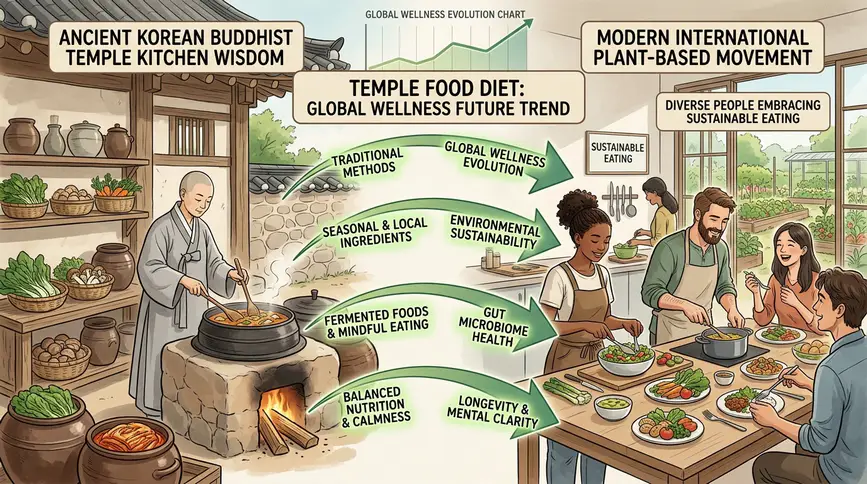
FAQ
Q1. Does temple food taste bland without strong spices?
A1. Not at all! While it lacks pungent herbs, the use of naturally fermented soy sauces, rich kelp broths, and mushroom powders creates a profound, savory umami flavor that truly highlights the natural taste of the vegetables.
Q2. How do I get enough protein on this diet?
A2. By incorporating a wide variety of legumes, tofu, tempeh, and protein-rich mushrooms into your daily meals. When planned correctly, plant-based sources easily meet your daily protein requirements without the saturated fats found in meat.
Q3. Can I drink coffee while following a temple diet?
A3. Traditionally, monks consume green tea or traditional herbal teas for meditation. While you don’t have to quit coffee completely, switching to traditional teas can further calm your nervous system and support digestion.
Q4. Is it expensive to buy all these special ingredients?
A4. Actually, it is highly economical! Because you are focusing on seasonal, local vegetables and inexpensive staples like whole grains and dried beans, your grocery bills will likely decrease compared to buying meat and processed foods.
Q5. Can I use onions and garlic just a little bit?
A5. Strict temple cuisine avoids them entirely (the Osinchae rule). However, if you are adapting it for casual home use and aren’t practicing meditation, you can use them. But trying it without them is a great palate-cleansing experience!
Q6. What kind of oil should I use for cooking?
A6. Refined seed oils are generally avoided. High-quality, unrefined sesame oil and perilla oil are the stars of this cuisine, used mostly for finishing dishes to preserve their delicate nutrients and flavors.
Q7. Is this diet safe for people with diabetes?
A7. Yes, it is excellent for blood sugar management due to the high fiber content and reliance on complex carbohydrates. However, always consult with your healthcare provider before making drastic dietary changes.
Q8. I hate the taste of brown rice. What can I substitute it with?
A8. You can mix a small amount of white rice with barley, oats, quinoa, or Job’s tears to improve the texture while maintaining a good fiber profile.
Q9. How do I make kelp broth at home?
A9. It is incredibly simple! Just wipe a piece of dried kelp (Kombu) with a damp cloth, soak it in cold water for a few hours, or gently simmer it for 10 minutes (do not boil it aggressively, or it will become bitter).
Q10. Can I eat fruit on the temple diet?
A10. Absolutely! Fresh, seasonal fruits are highly encouraged as natural snacks or light desserts, providing excellent antioxidants and vitamins.
Q11. Are there any specific times I should eat?
A11. Yes, mindful eating encourages regular meal times. Buddhist tradition often involves eating the last meal by late afternoon to give the digestive system ample time to rest before sleep.
Q12. What if I feel hungry between meals?
A12. If you are chewing your food thoroughly (at least 30 times per bite) and eating enough fiber, you shouldn’t feel starving. If you do, snack on unsalted nuts or steamed root vegetables.
Q13. Is temple food completely vegan?
A13. Yes, authentic Korean temple food is 100% vegan. It absolutely prohibits any animal products, including honey in strict traditional settings, though grain syrups are commonly used for sweetness.
Q14. How long does it take to see weight loss results?
A14. This is not a crash diet. It focuses on sustainable health. Most people notice improved digestion within a week, and steady, healthy weight loss after consistently following it for a month or two.
Q15. Can I meal-prep temple food for the week?
A15. Definitely! Many side dishes (banchan) like pickled vegetables, braised lotus roots, and seasoned dried greens can be kept in the refrigerator for several days and actually taste better as flavors meld.
Q16. What is the biggest challenge when starting this diet?
A16. The biggest hurdle for most Westerners is adjusting to the absence of heavy sodium, artificial MSG, and pungent spices. Your palate usually takes about two weeks to recalibrate and appreciate subtle flavors.
Q17. Do I need to buy organic produce?
A17. While organic is wonderful and aligns with the philosophy of natural harmony, it is not strictly mandatory. Buying fresh, locally grown seasonal produce is the most important factor.
Q18. Are there any fermented foods besides Kimchi?
A18. Yes! Doenjang (soybean paste), Ganjang (traditional soy sauce), and Gochujang (red chili paste) are the holy trinity of Korean fermentation, providing deep flavors and essential probiotics.
Q19. How does this diet affect mental health?
A19. Because the diet eliminates heavy, hard-to-digest foods and caffeine-induced spikes, many report feeling significantly calmer, more focused, and emotionally grounded.
Q20. Where can I learn more authentic recipes?
A20. There are many wonderful books on Korean Temple Cuisine available in English now! Also, checking out cultural centers or looking up designated Temple Food master monks online will give you endless inspiration.
🌿 Korean Temple Food Complete Guide Series
Embrace the art of mindful eating with our curated guide series! Bookmark this section and explore these essential resources to deeply understand the philosophy, ingredients, and healing recipes of Korean temple cooking.
-
- • Comprehensive Guide (Hub):
Korean Temple Food: A Beginner’s Guide to Mindful Eating
- • Comprehensive Guide (Hub):

Written by WhatIneed.kr
Having lived in South Korea, the US, and Canada, I love experiencing and exploring diverse cultures and dietary habits. As a dedicated food guide, I explore the rich traditions of Korean cuisine, specializing in authentic home cooking, traditional fermentation, and peaceful Korean temple food.