
Hello there! Have you ever thought about trying out a vegan diet but felt a little lost? Many of us find ourselves wanting to eat healthier, protect the environment, and make ethical choices. However, when you actually try to start a vegan diet, especially with Korean food, you might quickly realize it’s not as simple as it seems. There are so many hidden animal products like fish sauce or meat broth in dishes we love! You might find yourself saying, “I can’t eat this, and I can’t eat that either!” It’s easy to feel frustrated and give up.
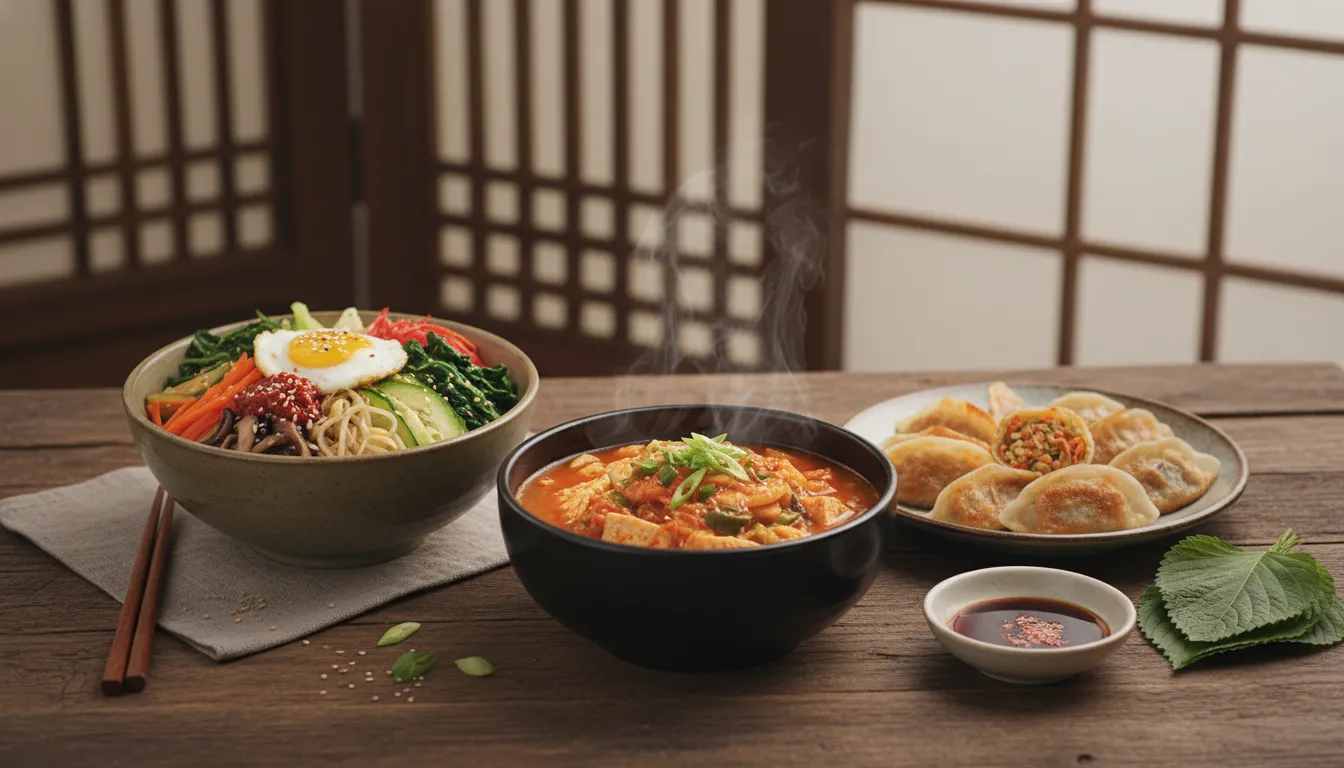
But don’t worry, because I have a wonderful suggestion for you. As someone who has lived in South Korea, Canada, and the United States for over ten years each, I’ve seen how different cultures approach vegetarianism and veganism. Based on my experiences, I highly recommend starting your Korean vegan journey with “Temple Food” (Sachal Eumsik). You might think temple food is too bland or complicated, but if you read on, you will discover how charming and perfect it is for beginners. Let me share with you three great reasons why Korean temple food is the best way to start your vegan journey.
A Gentle Start: Pure and Mild Flavors Without Osinchae
When I first tried going vegan, one of the hardest things was adjusting to the strong spices and seasonings common in everyday Korean food. Suddenly, the bold flavors I used to enjoy felt overwhelming. That’s when I discovered temple food, and it was a whole new world!
One of the biggest features of temple food is that it does not use “Osinchae” (the five pungent herbs). Osinchae includes garlic, green onion, wild chive, leek, and heunggeo (often replaced by onion in Korea). In Buddhism, these ingredients are avoided because they are believed to hinder spiritual practice. You might wonder, “How can food taste good without garlic and onions?” Well, interestingly enough, without these strong flavors, the natural taste and aroma of the main ingredients truly shine!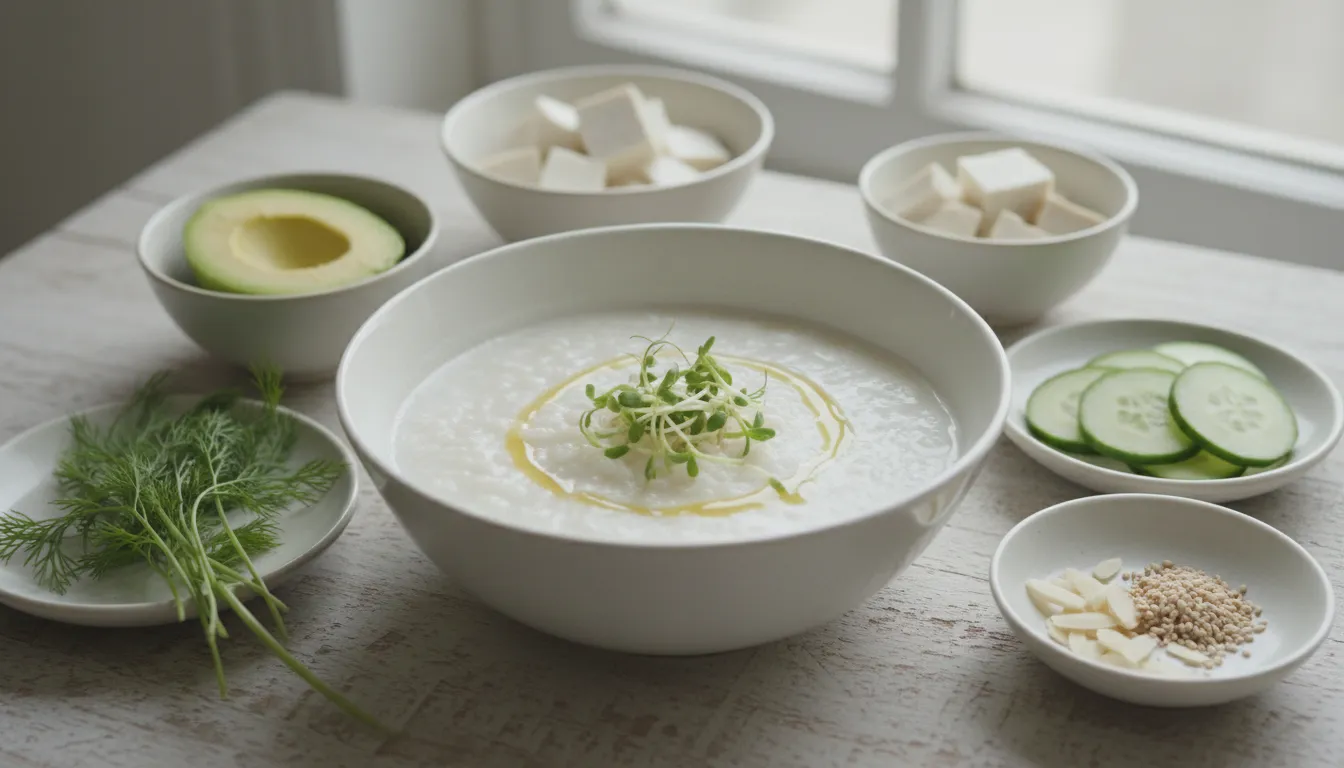
For example, when making soybean sprout soup, the broth gets its refreshing and savory flavor entirely from the sprouts themselves, without needing any garlic. At first, it might taste a bit plain, but as you slowly savor it, you will discover the delicate and deep flavors of vegetables, mushrooms, and beans that were previously hidden behind strong seasonings. This is a crucial advantage for beginners. It gently purifies a palate used to stimulating tastes, helping you adapt to a plant-based diet naturally and without resistance. Plus, it is incredibly gentle on your stomach! It feels almost like meditating; eating temple food allows you to focus purely on the joy of natural flavors.
Naturally Balanced Nutrition: Healthy Meals with Seasonal Ingredients
“Where will I get my protein if I don’t eat meat?” or “Won’t a vegetarian diet cause a nutritional imbalance?” These are common worries when people start a vegan diet. But if you look closely at temple food, you will see that these concerns are completely unnecessary.
Temple food actively utilizes a wide variety of plant-based ingredients like fresh seasonal vegetables, mushrooms, legumes, seaweed, and nuts. By following the laws of nature and using ingredients when they are most nutritious, the food not only tastes fantastic but also provides a balanced supply of essential nutrients.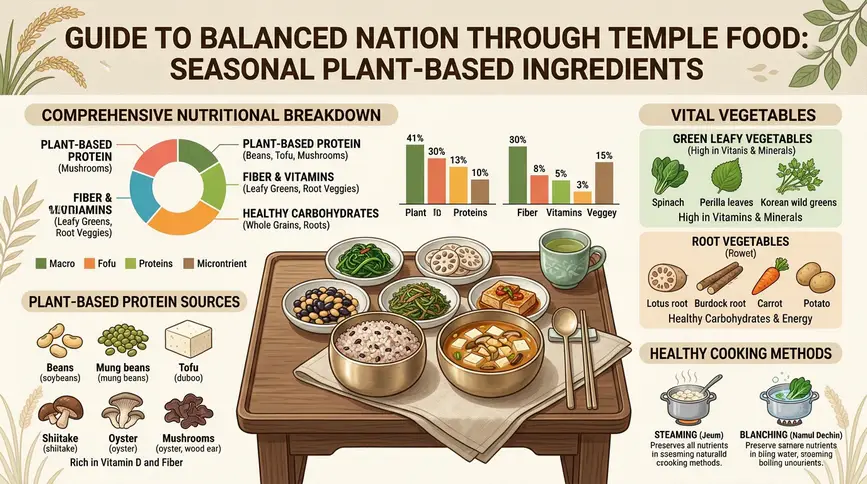
For instance, beans and tofu are excellent sources of plant-based protein. Various mushrooms are rich in Vitamin D and dietary fiber. Green leafy vegetables provide essential vitamins and minerals, while root vegetables offer healthy carbohydrates and fiber. Moreover, temple food primarily relies on healthy cooking methods like steaming, blanching, and lightly tossing, rather than deep-frying or heavy stir-frying, which minimizes nutrient loss.
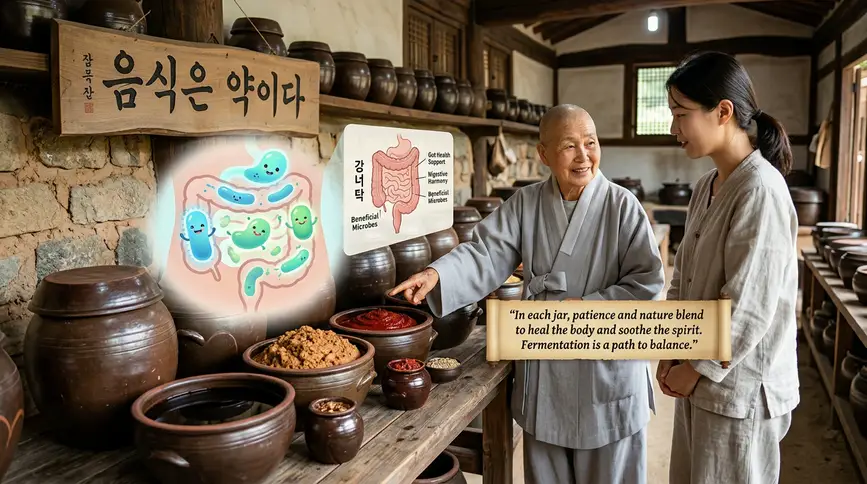
Fermented foods, such as soy sauce, soybean paste (doenjang), and chili paste (gochujang), are also vital components. They aid digestion and are great for gut health. I remember attending a temple food lecture where a monk said, “Food is medicine.” This philosophy of carefully preparing precious ingredients from nature and eating them with a grateful heart is the core of temple food. If you want to take care of your health while eating vegan, temple food is your best textbook.
Beyond Food: A Philosophy That Fills the Body and Mind
Temple food is much more than just a meal to fill your stomach; it carries deep philosophical meanings. The core values are “Ahimsa” (non-violence or not killing) and “Compassion.” The Buddhist teaching of respecting all living beings and causing no harm aligns perfectly with the vegan belief of opposing animal exploitation and practicing ethical consumption.
In temples, having a meal is referred to as “Gongyang.” This means going beyond the simple act of eating; it is an act of preparing and receiving food with deep respect and gratitude toward Buddha, the practitioners, and all living beings. From the moment the food is prepared to the moment it is eaten, every step is filled with respect for life.
This spirit resonates deeply with those of us practicing veganism. If your reason for choosing a vegan lifestyle comes from ethical concerns for animals and the environment, rather than just health, temple food serves as a wonderful guide. It helps us realize the preciousness of life through food and encourages a harmonious existence with nature.
When I experienced temple food at a monastery, I was deeply moved by the verses recited before and after the meal. It made me reflect on where the food came from and how much effort went into bringing it to my table, filling me with immense gratitude. Such experiences can change your attitude toward food and positively influence your approach to life. Through temple food, eating becomes an experience that nourishes both body and soul.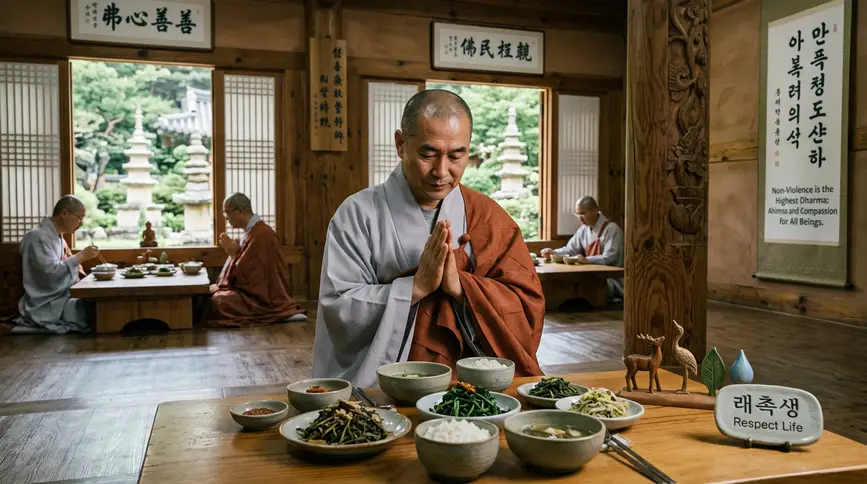
Wrapping Up: Your Joyful First Step into Korean Veganism
So far, we have explored three reasons why temple food is perfect for those starting a Korean vegan diet. The absence of Osinchae makes it gentle on the stomach and highlights natural flavors. It offers a nutritionally balanced diet using seasonal ingredients. And its philosophy of respecting life deeply resonates with ethical vegan values.
Beyond all this, temple food boasts an incredible variety of colorful and delicious dishes. Please throw away any preconceived notions that it might be difficult or tasteless, and give it a try. Visiting a restaurant specializing in temple food or trying a simple recipe at home are great ways to start. Temple food might just become the best companion on your vegan journey, making it richer and more enjoyable. Why not take your first healthy and delicious step into Korean veganism with temple food? 🙂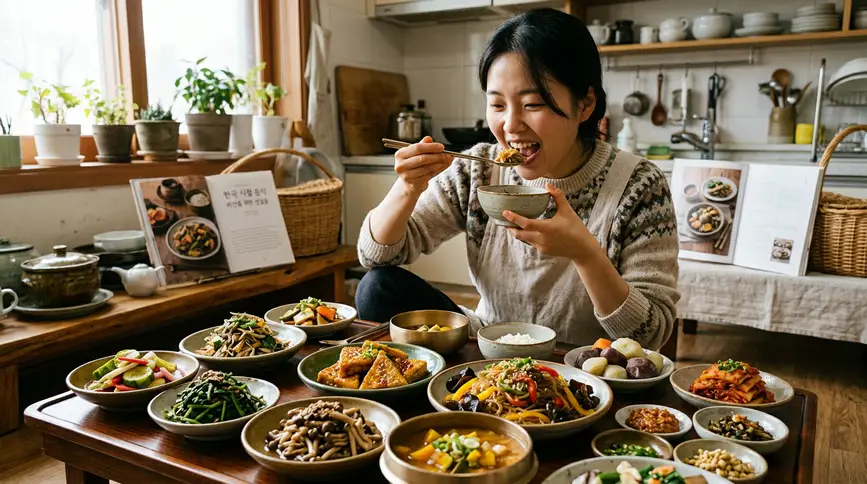
FAQ
Q1. Is temple food completely tasteless because it lacks strong spices?
A1. While it lacks strong spices like garlic and onions, temple food uses natural ingredients and fermented sauces to create deep, savory flavors. It might take a moment to adjust, but you will soon appreciate the natural taste.
Q2. What exactly are ‘Osinchae’ and why are they avoided?
A2. Osinchae refers to five pungent herbs: garlic, green onion, leek, wild chive, and heunggeo (onion). Buddhism avoids them as they are believed to create heat and emotional disturbances, distracting from meditation.
Q3. Can I get enough protein on a temple food diet?
A3. Absolutely. Temple food relies heavily on legumes like soybeans and tofu, as well as nuts and seeds, providing plenty of high-quality plant-based protein.
Q4. Is it expensive to eat temple food?
A4. It doesn’t have to be! While specialized restaurants can be pricey, making it at home using seasonal, local vegetables is very affordable.
Q5. How is temple food different from a regular vegan diet?
A5. Both avoid animal products, but temple food also avoids Osinchae. Additionally, temple food emphasizes seasonal eating, minimal waste, and mindfulness during cooking and eating.
Q6. I live in North America; can I still make temple food?
A6. Yes! You can adapt the philosophy using local, seasonal vegetables available in your area. You don’t always need specific Korean ingredients to practice the mindfulness of temple food.
Q7. What is the most common seasoning used?
A7. Traditional fermented soy sauce (ganjang), soybean paste (doenjang), perilla oil, sesame oil, and sea salt are the main pillars of flavor.
Q8. Are there any desserts in temple food?
A8. Yes. Sweets are usually made from rice, nuts, seeds, and natural sweeteners like rice syrup. Traditional Korean sweets like Hangwa are often enjoyed.
Q9. Is temple food gluten-free?
A9. Many dishes naturally are, as they rely on rice and vegetables. However, you must check the soy sauce and soybean paste, as some commercial varieties contain wheat.
Q10. Do monks eat three meals a day?
A10. Usually, yes, but the meals are strictly portioned to prevent overeating, and the afternoon meal is often lighter.
Q11. Can children eat temple food?
A11. Yes, it is very healthy and mild, making it excellent for children. It helps them develop a palate for natural flavors.
Q12. How does temple food handle food waste?
A12. The philosophy encourages zero waste. Even vegetable peels are often used to make vegetable broth (chaesu), and exactly what is taken must be eaten.
Q13. Are all Korean side dishes (banchan) considered vegan?
A13. No, many regular Korean banchan use fish sauce, dried shrimp, or beef broth. You must specifically ask for or prepare vegan versions.
Q14. What can I use instead of garlic and onions at home?
A14. You can use mushrooms, kelp (kombu), radish, and ginger to build deep savory broths and flavors without relying on the allium family.
Q15. Is temple food difficult to cook?
A15. Not at all. Many recipes involve simple blanching or steaming, followed by a light dressing of sesame oil and soy sauce. It’s actually very straightforward!
Q16. Why do they say “food is medicine”?
A16. In the temple philosophy, eating in harmony with the seasons and your body’s needs prevents illness and maintains balance, acting as preventative medicine.
Q17. Do I need to be Buddhist to enjoy it?
A17. Not at all. Anyone who appreciates healthy, plant-based, and mindful eating can enjoy and benefit from temple food.
Q18. Are spicy foods allowed in temple food?
A18. Yes, chili powder and chili paste (gochujang) are used, but they are generally less spicy and aggressive than mainstream Korean food.
Q19. Where can I find temple food recipes?
A19. There are many great books and online resources, including YouTube channels run by Korean monks and culinary institutes, available in English.
Q20. What is ‘Baru Gongyang’?
A20. It is the traditional, formal monastic meal where monks eat from wooden bowls (Baru) in silence, expressing deep gratitude and ensuring zero food waste by cleaning the bowls with water and drinking it.
🌿 Korean Temple Food Complete Guide Series
Embrace the art of mindful eating with our curated guide series! Bookmark this section and explore these essential resources to deeply understand the philosophy, ingredients, and healing recipes of Korean temple cooking.
-
- • Comprehensive Guide (Hub):
Korean Temple Food: A Beginner’s Guide to Mindful Eating
- • Comprehensive Guide (Hub):

Written by WhatIneed.kr
Having lived in South Korea, the US, and Canada, I love experiencing and exploring diverse cultures and dietary habits. As a dedicated food guide, I explore the rich traditions of Korean cuisine, specializing in authentic home cooking, traditional fermentation, and peaceful Korean temple food.