Having spent decades exploring diverse culinary landscapes across North America—from the bustling, diverse farmers’ markets of the West Coast to the rich, maple-infused traditions of the East—I have always been fascinated by how food connects us to nature. In my culinary journey, I have cooked with an array of global ingredients, but nothing has grounded my cooking quite like Korean temple food. It is a cuisine that perfectly aligns with the global movement toward mindful eating, sustainability, and plant-based wellness. Today, I want to guide you through creating your very own Korean temple food pantry, transforming your kitchen into a sanctuary of natural, profound flavors.
The Core Philosophy of Temple Cuisine
Before stocking your pantry, it is essential to understand the beautiful, mindful philosophy behind Korean temple food. Unlike many modern culinary practices that rely on heavy spices or artificial enhancements, temple cuisine is entirely about respecting the ingredient in its purest form.
First and foremost is the strict exclusion of “Osinchae” (the five pungent vegetables). Authentic temple food completely avoids garlic, green onions, leeks, chives, and onions. Coming from a background where garlic and onions are the foundational base for almost every soup or sauce in North American and standard Korean cooking, this might seem challenging at first. However, removing these overpowering flavors allows the subtle, delicate tastes of the primary vegetables to shine through.
Furthermore, temple cooking strictly forbids artificial additives and MSG. The rich, umami flavors are achieved entirely through natural ingredients provided by the earth. It is a practice deeply rooted in seasonality, prioritizing local, seasonal vegetables and wild greens sourced directly from the mountains and fields.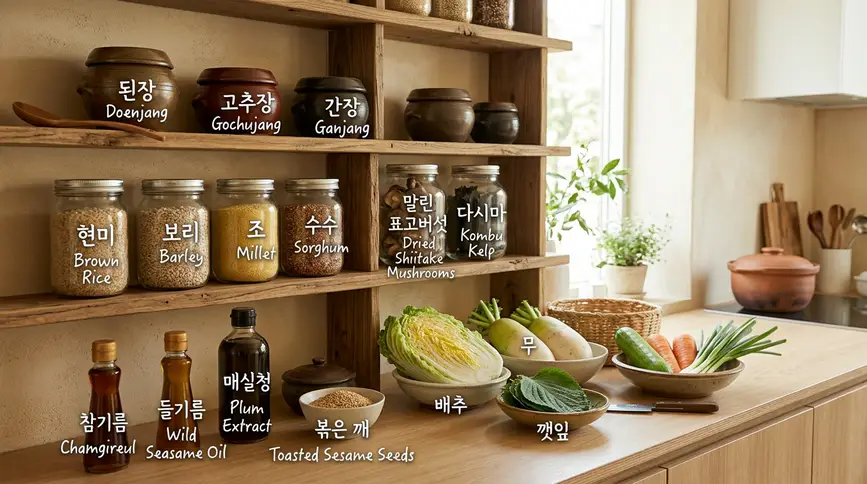
Essential Items for Your Temple Food Pantry
To embark on this mindful culinary journey, you need to curate a pantry that relies on natural fermentation and earthy bases. Here are the core items you must have.
Traditional fermented sauces, known as “Jang,” are the absolute backbone of temple food. Because you are not using garlic or onions, the depth of your dishes will come entirely from these fermented wonders. You should prioritize authentic, traditionally fermented Doenjang (soybean paste), Gukganjang (soup soy sauce), and Gochujang (red chili paste) over mass-produced commercial versions. A high-quality, aged traditional soy sauce can elevate a simple plate of blanched greens into a masterpiece of flavor.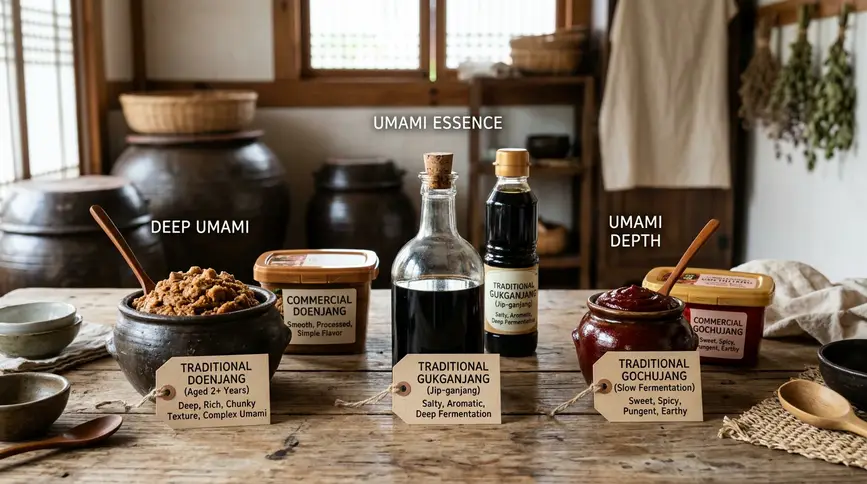
Next, you must build your foundation for “Chaesu,” the essential vegetable broth used instead of meat or artificial stocks. Keep your pantry stocked with dried shiitake mushrooms, dried kelp (dashima), radish, and cabbage. Simmering these ingredients yields a profoundly savory, clean, and umami-rich natural broth that serves as the base for stews and noodle dishes.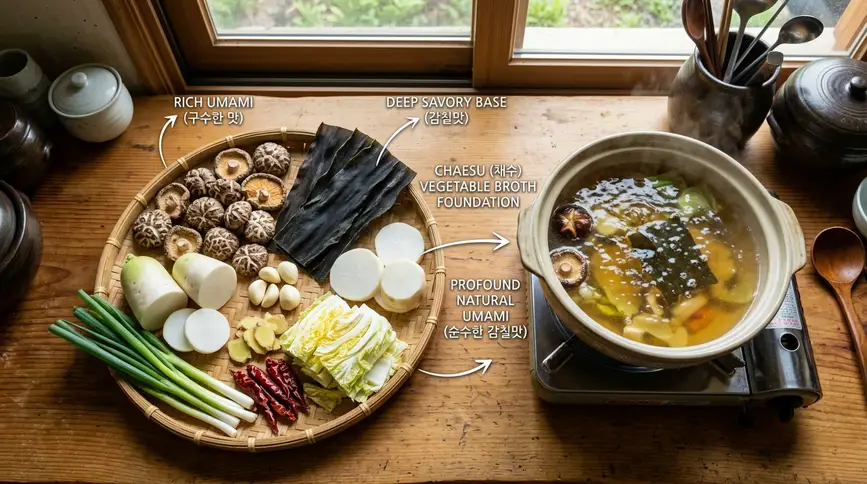
For flavor accents and finishing touches, premium sesame oil and roasted sesame seeds are non-negotiable. Crushing the sesame seeds lightly with your fingers right before adding them to a dish releases incredible fragrant oils. Additionally, keep natural plum extract (maesil) and natural fermented vinegar on hand. These add a beautiful natural sweetness and tanginess, perfect for creating pickled side dishes without using refined sugars.
Finally, replace standard white rice with wholesome, nutrient-dense grains. Stock up on millet, barley, brown rice, and sorghum. Mixing these grains not only enhances the nutritional profile of your meals but also provides a nutty, chewy texture that perfectly complements traditional vegetable side dishes.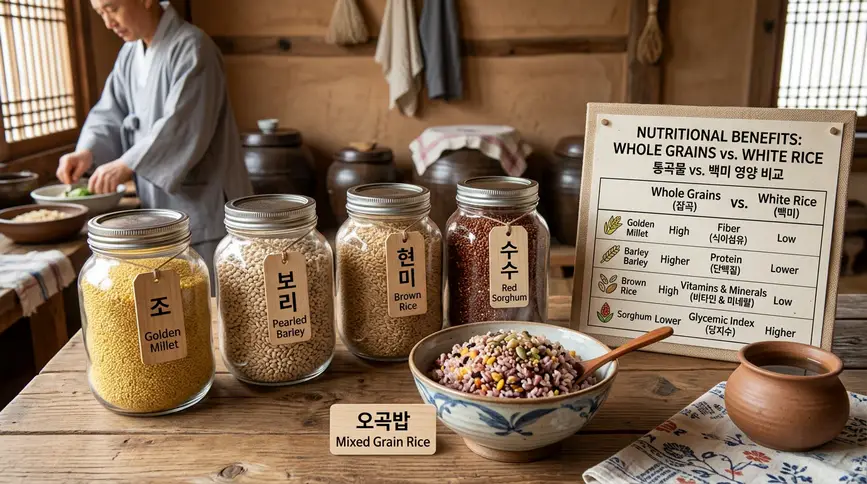
Beginner Cooking Tips and the Golden Ratio
Cooking temple food is an exercise in restraint and mindfulness. When you first start preparing vegetable side dishes (namul), it is easy to overcomplicate things. I always recommend the “1:1:1 Golden Ratio” for beginners. When dressing blanched greens like spinach, simply mix one part traditional soup soy sauce, one part sesame oil, and one part crushed sesame seeds. This foolproof ratio guarantees a clean, savory, and aromatic dish every single time.
The secret to mastering this cuisine is minimal intervention. Do not drown your beautiful seasonal produce in heavy sauces. Use a light touch of soy sauce, soybean paste, or plum extract just to coax out the natural sweetness of the vegetables. It is akin to farm-to-table cooking, where the produce is the undisputed star of the plate.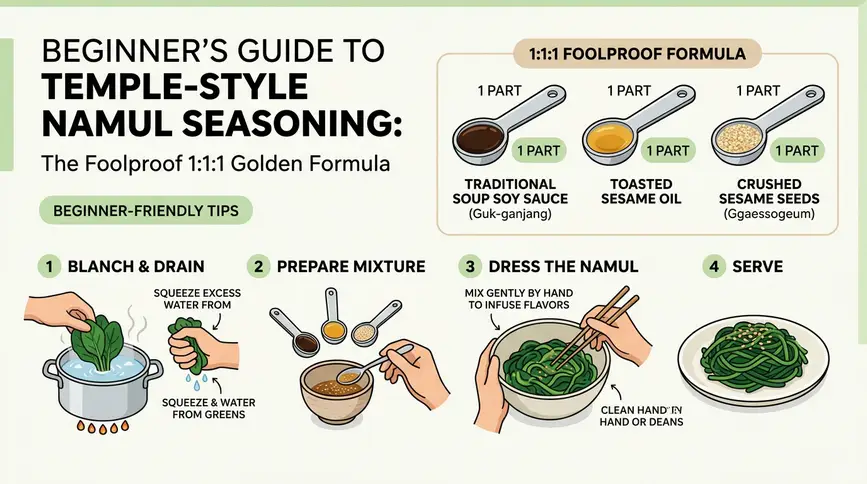
Lastly, embrace a zero-waste mindset by utilizing the entire plant. A great example is spinach. Instead of cutting off and discarding the pink roots, carefully scrape and clean them. These roots hold an incredible amount of concentrated sweetness and essential nutrients. Incorporating these parts into your cooking not only reduces waste but also honors the Buddhist philosophy of respecting all life and nature’s gifts.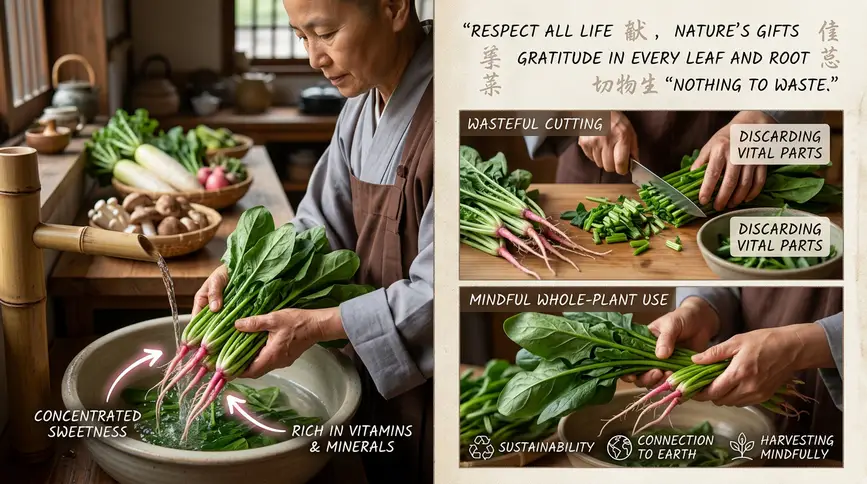
FAQ
Q: What is Osinchae?
A: Osinchae refers to five pungent vegetables strictly avoided in Korean temple food: garlic, green onions, leeks, chives, and onions.
Q: How do you get flavor without garlic and onions?
A: Flavor is built through traditional fermented sauces (Jang), natural vegetable broths (Chaesu), and high-quality sesame oil.
Q: What is Chaesu?
A: Chaesu is a natural, vegan vegetable broth typically made by simmering dried shiitake mushrooms, kelp, radish, and cabbage.
Q: Can I use regular commercial soy sauce?
A: While you can, it is highly recommended to use traditional, naturally fermented soup soy sauce (Gukganjang) for the authentic depth of flavor.
Q: What is the golden ratio for seasoning greens?
A: The foolproof 1:1:1 ratio consists of equal parts traditional soup soy sauce, sesame oil, and crushed roasted sesame seeds.
Q: Is Korean temple food entirely vegan?
A: Yes, traditional Korean temple food is 100% plant-based and vegan, avoiding all meat, dairy, and animal byproducts.
Q: Why do I need plum extract?
A: Plum extract (maesil) is used as a natural sweetener and flavor enhancer, replacing refined white sugar in sauces and marinades.
Q: Should I use white rice for temple food?
A: It is better to use wholesome mixed grains like brown rice, barley, millet, and sorghum for better nutrition and authentic texture.
Q: Can I use artificial MSG?
A: No, artificial additives and MSG are strictly forbidden. All umami must come from natural ingredients like kelp and dried mushrooms.
Q: Why do we keep the pink roots of spinach?
A: The pink roots are highly nutritious and contain a concentrated, earthy sweetness that enhances the overall flavor of the dish.
Q: Do I need a lot of spices for temple cooking?
A: No, temple cooking is about minimal intervention. You only need a few high-quality basics like soy sauce, sesame oil, and soybean paste.
Q: Why do I need to crush sesame seeds with my hands?
A: Crushing the seeds right before use releases their natural essential oils, dramatically increasing the nutty aroma and flavor of the dish.
🌿 Korean Temple Food Complete Guide Series
Embrace the art of mindful eating with our curated guide series! Bookmark this section and explore these essential resources to deeply understand the philosophy, ingredients, and healing recipes of Korean temple cooking.
-
- • Comprehensive Guide (Hub):
Korean Temple Food: A Beginner’s Guide to Mindful Eating
- • Comprehensive Guide (Hub):

Written by WhatIneed.kr
Having lived in South Korea, the US, and Canada, I love experiencing and exploring diverse cultures and dietary habits. As a dedicated food guide, I explore the rich traditions of Korean cuisine, specializing in authentic home cooking, traditional fermentation, and peaceful Korean temple food.