Having spent decades exploring the rich culinary landscapes across North America and Asia, I have come to appreciate how deeply food reflects the cultural and spiritual ethos of a community. From the bustling, spice-scented farmers’ markets of the West to the serene, minimalist kitchens of Eastern monasteries, every culinary tradition has its unique heartbeat. Among these, Korean temple food stands out as a profound expression of mindfulness, sustainability, and harmony. It is a strictly plant-based cuisine, but what truly makes it fascinating is not just what is included on the plate, but what is intentionally left out. At the heart of this dietary practice is the concept of “Osinchae.”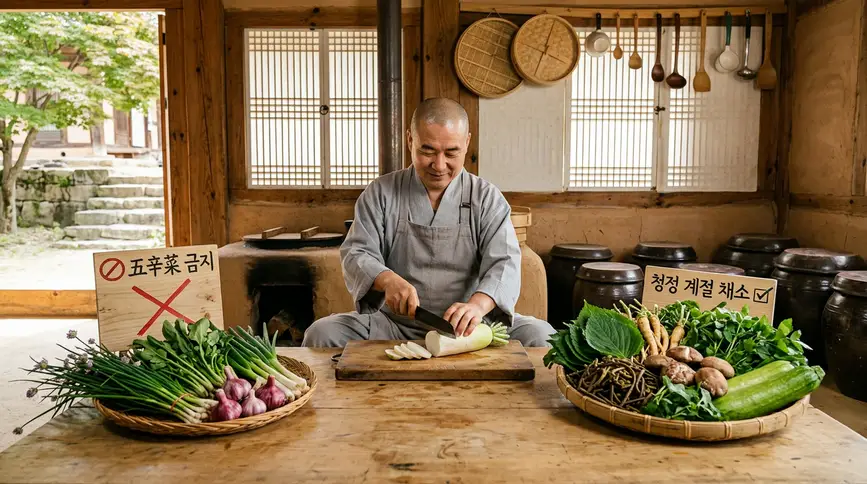
If you have ever cooked a hearty meal, you know that garlic, onions, and scallions are the foundational aromatic pillars of almost every global cuisine. They build the base of stews, stir-fries, and sauces. Yet, in the quiet, meditative environment of a Korean Buddhist temple, these flavorful ingredients are strictly forbidden. To understand Osinchae is to understand the very soul of monastic cooking, where culinary choices are intrinsically linked to spiritual discipline and communal respect.
What Exactly is Osinchae?
The term “Osinchae” translates to the “five pungent vegetables.” In the context of Korean Buddhism, the word “pungent” does not simply refer to a spicy heat, like that of a chili pepper. Instead, it describes a stimulating, aggressive aroma and flavor profile that has the power to agitate the mind and body. The five forbidden vegetables under this classification are:
Garlic (Daesan): Perhaps the most universally loved aromatic, known for its intense, lingering odor and sharp taste.
Green Onion and Onion (Chong): This category includes all varieties of scallions, spring onions, and regular onions.
Leek or Chive (Gu): A perennial plant with a distinctively sharp, onion-like flavor.
Wild Chive (Jachong): A popular spring vegetable in Korea, known as Dallae, which has a mildly spicy and earthy bite.
Asafoetida (Heunggeo): Originating from the Sanskrit word ‘Hingu,’ this is a plant belonging to the celery family. While it is widely used as a spice in parts of South Asia, it is quite rare in Korea. Therefore, the focus of the restriction usually falls heavily on the first four local ingredients.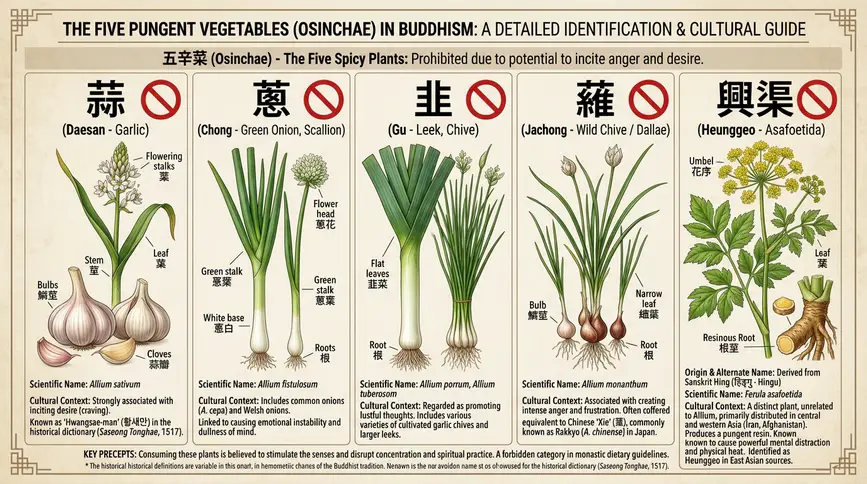
Living in diverse cultural melting pots, I have seen how these five ingredients are celebrated for their bold flavors. Removing them seems like stripping away the very essence of savory cooking. However, temple chefs view this not as a limitation, but as an invitation to discover the pure, unmasked flavors of nature.
The Three Pillars of Exclusion: Why Forbid These Ingredients?
The prohibition of Osinchae is not arbitrary. It is deeply rooted in ancient Buddhist scriptures, monastic codes of conduct, and the practical realities of communal monastic life. The reasoning can be understood through three distinct perspectives.
The Spiritual Perspective focuses heavily on maintaining mental equilibrium. According to traditional Buddhist texts, such as the Surangama Sutra, consuming these five pungent vegetables has a direct physiological and psychological impact. The scripture states that eating them cooked generates lust and worldly desires, while eating them raw increases anger and aggression. For a monk or nun whose life is dedicated to meditation and achieving a state of inner stillness, any food that acts as an emotional or physical stimulant is a direct hindrance to their spiritual practice.
The Disciplinary Perspective is based on the codified rules of the monastic community. The Brahmajala Sutra explicitly outlines the “Five Pungent Roots Precept,” which formally forbids the consumption of these ingredients. It is a vow of discipline that physically manifests a monk’s commitment to the Buddhist path. Adhering to this dietary rule is a daily, active practice of self-restraint.
The Practical Perspective is perhaps the most relatable, even for those outside the monastic world. Monastic life involves long hours of sitting in close proximity to others in enclosed meditation halls. If you have ever been in a tight space or on public transportation with someone who just ate a heavy garlic-infused meal, you can understand the distraction it causes. The strong, lingering odors of Osinchae seep through the breath and pores, creating a disruptive environment. Banning these ingredients is a profound act of consideration and empathy for one’s fellow practitioners.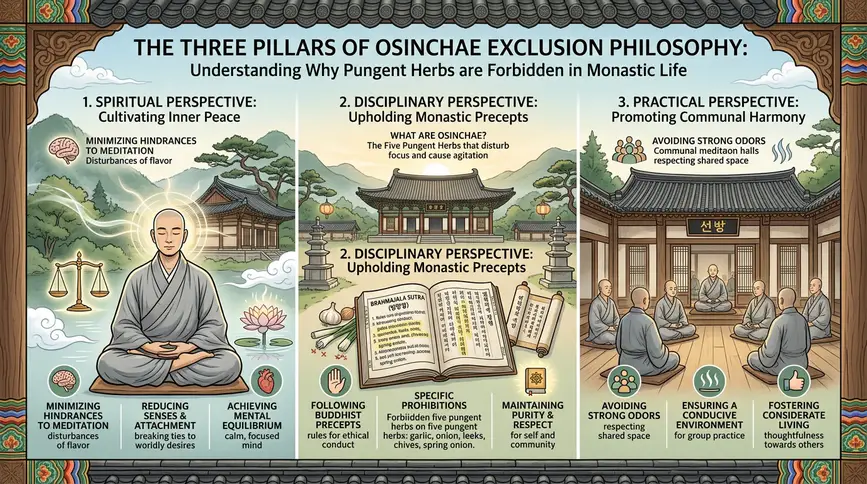
The Fascinating Scientific Connection: Allicin
What makes the ancient wisdom behind the Osinchae ban truly remarkable is how well it aligns with modern nutritional science. When we examine garlic, onions, leeks, and chives in a laboratory, we find that they all share a common, powerful organic compound called Allicin.
Allicin is the chemical responsible for the sharp, pungent smell and taste of these vegetables. Scientifically, it is known for its incredible health benefits, acting as a strong antibacterial and antioxidant agent. However, Allicin is also a powerful stimulant. It promotes vigorous blood circulation, increases body temperature, and heavily stimulates the digestive tract.
This scientific reality perfectly mirrors the ancient Buddhist observation. The physical heat and increased blood flow caused by Allicin are exactly what the monks identified as “heating the body and disturbing the mind.” While an energetic boost might be ideal for a physically demanding lifestyle, it directly contradicts the requirements of deep, motionless meditation. The correlation between the chemical properties of Allicin and the spiritual goal of tranquility is a brilliant testament to the observational wisdom of early Buddhist practitioners.
A Culinary Philosophy of Compassion and Balance
Cooking without the world’s most popular aromatics requires immense creativity. In the absence of garlic and onions, Korean temple food relies on the deep umami of naturally fermented soy sauces, soybean pastes, kelp, and a variety of wild mushrooms. The flavor profiles are delicate, clean, and deeply satisfying.
By excluding Osinchae, temple cuisine allows the natural essence of seasonal vegetables to shine. A simple dish of spinach or radish tastes completely different when it is not overpowered by minced garlic. This culinary approach teaches us a valuable lesson: sometimes, true flavor is found not in adding more, but in stripping away the overwhelming. It is a beautiful metaphor for life itself—finding peace, clarity, and deep appreciation by removing the unnecessary stimulants and focusing on the pure essence of what remains.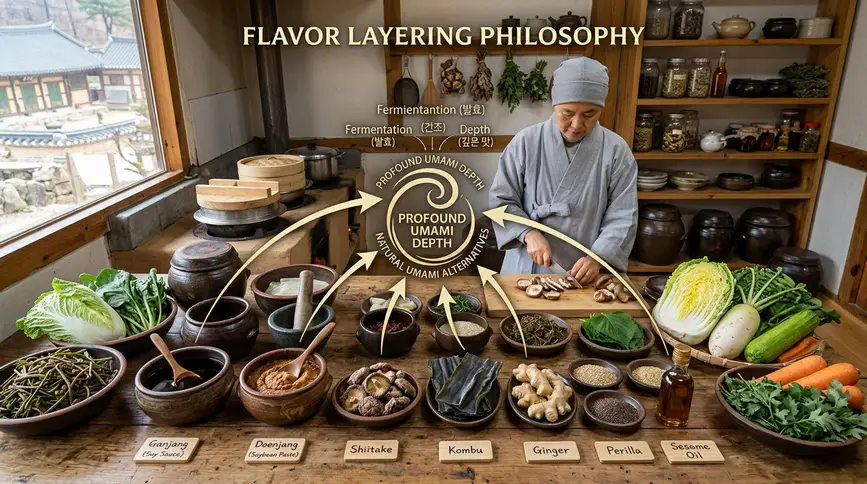
FAQ
Q: What exactly is Osinchae?
A: Osinchae refers to the five pungent vegetables forbidden in Korean Buddhist temple food. These include garlic, green onions/onions, leeks, wild chives, and asafoetida.
Q: Why are these specific vegetables banned in temple food?
A: They are banned because they act as strong stimulants. Buddhist texts claim they induce lust when cooked and anger when raw, disrupting the mental peace required for meditation. They also cause strong body odor, which is disruptive in communal settings.
Q: Does Osinchae include ginger or chili peppers?
A: No, ginger and chili peppers are not considered part of the Osinchae. While they are spicy or aromatic, they do not contain the specific pungent compounds (like Allicin) that are believed to disrupt spiritual equilibrium in the same way.
Q: What is Asafoetida (Heunggeo)?
A: Asafoetida is a pungent spice derived from a plant in the celery family, commonly used in Indian and Middle Eastern cooking. Because it is rare in Korea, the ban practically focuses on the other four local allium vegetables.
Q: How do temple chefs flavor food without garlic and onions?
A: Temple chefs masterfully use fermented soy sauce (ganjang), soybean paste (doenjang), perilla seeds, mushrooms, kelp (kombu), and ginger to build complex, umami-rich flavor profiles without masking the natural taste of the vegetables.
Q: Is the ban on Osinchae strictly a Korean Buddhist practice?
A: The ban originates from Mahayana Buddhism, which is widely practiced in East Asia. Therefore, you will find similar dietary restrictions in Chinese, Japanese, and Vietnamese Buddhist temple cuisines, though regional interpretations may vary slightly.
Q: What is the scientific explanation behind the Osinchae rule?
A: The vegetables in the Osinchae group contain Allicin, a sulfur compound that strongly stimulates blood circulation and raises body temperature. This physiological stimulation aligns with the Buddhist view that these foods agitate the body and mind.
Q: Can ordinary laypeople eat Osinchae?
A: Yes. The strict prohibition of Osinchae applies primarily to ordained monks and nuns residing in temples. Lay Buddhists may choose to avoid them during specific retreats or holy days, but it is not a mandatory daily rule for the general public.
Q: How does the lack of Osinchae affect the fermentation of temple Kimchi?
A: Regular Kimchi relies heavily on garlic and onions to aid fermentation and create its signature bold taste. Temple Kimchi uses alternative ingredients like fruit purees, glutinous rice paste, and extra ginger to ferment the cabbage, resulting in a much lighter, crisper, and cleaner-tasting Kimchi.
Q: Does avoiding Osinchae make the food less healthy?
A: Not at all. While allium vegetables are healthy, temple food replaces them with a highly diverse array of seasonal wild greens, mushrooms, and fermented foods, ensuring a nutritionally complete, antioxidant-rich, and gut-friendly diet.
Q: Do all vegan diets exclude Osinchae?
A: No. Standard veganism only excludes animal products. The exclusion of Osinchae is a specific requirement of Buddhist dietary laws, making temple food a unique subcategory of vegan cuisine.
Q: Is it possible to try authentic temple food outside of a monastery?
A: Yes, many specialized restaurants, particularly in cities like Seoul, offer authentic temple cuisine prepared by trained chefs or even practicing nuns, allowing the public to experience this mindful way of eating.
🌿 Korean Temple Food Complete Guide Series
Embrace the art of mindful eating with our curated guide series! Bookmark this section and explore these essential resources to deeply understand the philosophy, ingredients, and healing recipes of Korean temple cooking.
-
- • Comprehensive Guide (Hub):
Korean Temple Food: A Beginner’s Guide to Mindful Eating
- • Comprehensive Guide (Hub):

Written by WhatIneed.kr
Having lived in South Korea, the US, and Canada, I love experiencing and exploring diverse cultures and dietary habits. As a dedicated food guide, I explore the rich traditions of Korean cuisine, specializing in authentic home cooking, traditional fermentation, and peaceful Korean temple food.